
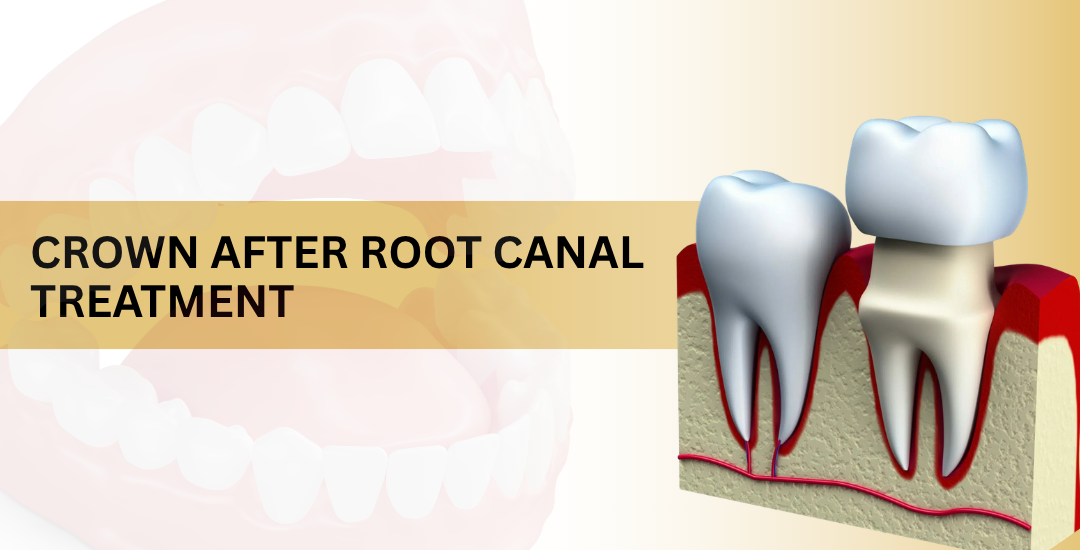
A root canal treated tooth fractures more easily than a vital one. Removing the pulp strips the tooth of its internal moisture supply, leaving dentin brittle and unsupported under daily chewing load. A crown encases the full visible structure, distributes bite forces evenly, and seals the access cavity against recontamination. Front teeth with intact structure are the exception; molars and premolars almost always need one.
Dr. Namratha Chandrahari, a renowned dentist at Dental Clinic in Banjara Hills, “Delaying the crown after a root canal is one of the most common reasons treated teeth fail the filling holds temporarily, but the unsealed, devitalised tooth is one hard bite away from a fracture that no restoration can fix.”
Why Does a Root Canal Tooth Break Without a Crown?
The structural change inside a root canal treated tooth is the reason a crown isn’t optional for most cases. Removing the pulp doesn’t just clear the infection; it fundamentally changes the tooth’s ability to handle stress.
- Moisture Loss: Once the pulp is removed, dentin dries out over time and becomes significantly more brittle, cracking far more easily under occlusal load than a vital tooth would.
- Access Cavity Weakening: The opening drilled to reach the canals passes through the central cusp-supporting structure, leaving two or four unsupported walls that splay under bite forces.
- Existing Decay Loss: Most teeth needing root canals already had substantial decay or old fillings beforehand, so structural loss had accumulated well before the access cavity was even cut.
- Reinfection Risk: A permanent crown seals the gutta-percha filling completely, whereas a temporary filling develops microleakage within weeks and allows bacteria to track back down into the cleaned canal.
And the data on this is consistent. Teeth restored with a crown after root canal treatment show significantly higher survival rates at 5 and 10 years than those restored with filling alone. Dental crown treatment placed within 4 to 6 weeks of the root canal protects the investment already made in saving the tooth.
Which Teeth Always Need a Crown and Which Ones Sometimes Don't
Tooth location, remaining structure, and functional load all determine whether a crown is mandatory or whether a simpler restoration holds long-term.
Tooth Type | Crown Required | Reason |
Molars | Almost always | Highest bite forces; most structural removal during access |
Premolars | Almost always | Direct chewing load; high cusp fracture risk |
Upper front teeth | Case dependent | Crown needed only if significant structure is missing |
Lower front teeth | Often not required | Smallest access cavity; low fracture risk |
- Remaining Structure: If more than half the coronal tooth structure is intact after the root canal, a post-and-core with composite can work for anterior teeth, but the call needs clinical judgement, not guesswork.
- Bruxism: Patients who grind their teeth shift every posterior root canal treated tooth firmly into must-have-a-crown territory, since nocturnal forces can run two to three times higher than normal chewing loads.
- Crown Material: For teeth that do need a crown, zirconium crowns are widely preferred post-root canal because their flexural strength of 900 to 1,200 MPa handles posterior load without the chipping risk of older porcelain-fused-to-metal options.
- Timing: Waiting longer than 3 months to place the crown measurably increases fracture and recontamination risk, so the restoration phase isn’t something to defer until convenient.
So the short answer is: if it’s a back tooth, don’t skip the crown. If it’s a front tooth with good remaining structure, ask your clinician whether a post-and-core or a full crown is being recommended. For more on what root canal treatment covers, the guide on single-visit root canals explains how modern single-session protocols affect the restoration timeline.
Why Choose Dr. Namratha Chandrahari?
The clinic is led by Dr. Namratha Chandrahari, MDS Prosthodontics, MFD RCSI, with over 12 years in complex restorative and endodontic cases. She holds national-level recognition as an implantology mentor and specialises in post-endodontic crown planning using CAD/CAM fabricated zirconia and all-ceramic restorations. She treats root canal and crown as a single care episode, not two separate appointments.
Enamel Dental uses in-house milling for select crown cases, which shortens fabrication time significantly. Patients aren’t sent home with a temporary filling and a follow-up that gets postponed.

Book Your Appointment
Root canal done but still waiting on the crown?
FAQ
Is a crown always needed after a root canal on a front tooth?
Not always; front teeth with intact structure can be restored with a composite filling and post in some cases.
How long can you wait before getting a crown after a root canal?
Clinicians recommend placing the crown within 4 to 6 weeks of the completed root canal to prevent fracture and reinfection.
Can a tooth crack if a crown is delayed after root canal treatment?
Yes, devitalised teeth without crown coverage are at significantly higher risk of vertical fracture, which often requires extraction.
Does a crown after root canal treatment last a long time?
A well-fitted zirconia or ceramic crown on a root canal treated tooth typically lasts 10 to 15 years or longer with good oral hygiene.
References
