
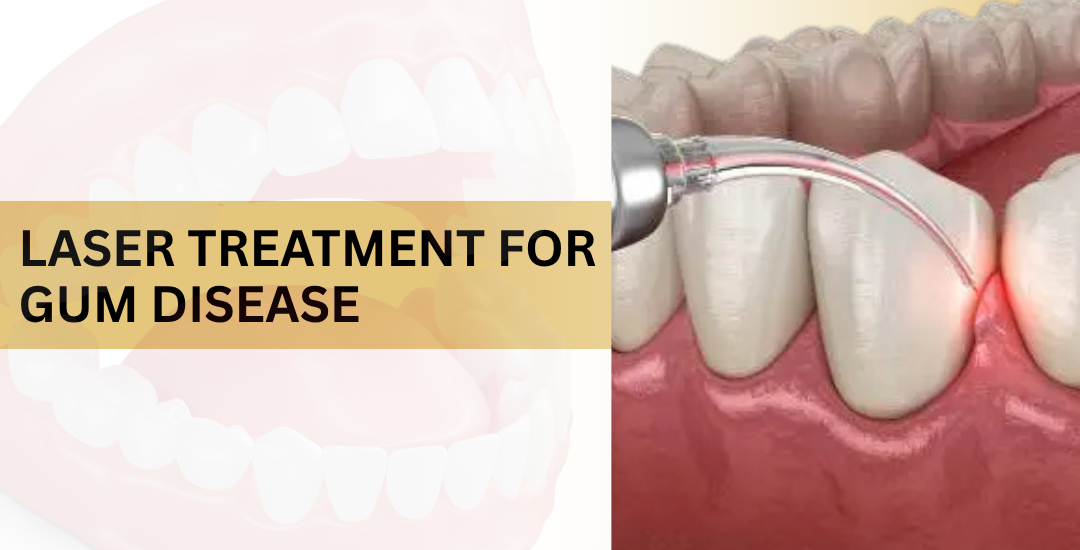
Yes, laser treatment helps gum disease heal faster, but it doesn’t work alone. A diode or Nd:YAG laser targets infected tissue inside periodontal pockets, eliminates bacteria at depths scaling can’t always reach, and reduces post-treatment inflammation significantly. Gingivitis responds within 2 to 3 days in most cases; periodontitis requires more sessions, but outcomes consistently improve when laser is added to conventional treatment.
Dr. Namratha Chandrahari, a renowned dentist at Dental Clinic in Banjara Hills, “Laser-assisted periodontal therapy works because it reaches bacterial biofilm inside the pocket that a scaler physically can’t access, and the simultaneous bactericidal effect means the tissue starts healing from a cleaner baseline than traditional debridement alone.”
How Does Laser Treatment Work on Infected Gum Tissue?
Laser energy acts on infected gum tissue through two primary mechanisms: thermal destruction of bacteria and selective removal of diseased soft tissue without cutting healthy attachment. Both happen simultaneously during a single session.
- Bacterial Elimination: Diode lasers at 810 to 980 nm wavelengths penetrate gum tissue and destroy gram-negative anaerobic bacteria, the primary pathogens in periodontitis, at depths of 2 to 3 mm inside the pocket that scaling instruments cannot physically reach.
- Infected Tissue Removal: The laser vaporises the ulcerated epithelium lining the pocket wall without disrupting healthy connective tissue fibres, which means the site is cleaner and better prepared for reattachment than after scalpel debridement.
- Clot Formation: Laser energy stimulates the formation of a stable fibrin clot at the treated site, which acts as a biological scaffold for new connective tissue to attach to the root surface during healing.
- Reduced Bleeding: Laser simultaneously seals capillaries during tissue removal, so post-operative bleeding is minimal, post-procedure discomfort is significantly lower, and patients return to normal function faster than after flap surgery.
Because the diseased tissue is removed and the bacterial load is sharply reduced in the same appointment, the body’s repair process starts from a significantly cleaner environment. Root canal treatment planned alongside gum treatment is often sequenced more efficiently when laser decontamination has already reduced the overall oral bacterial burden first.
What Types of Gum Disease Respond Best to Laser Treatment?
Not every stage of periodontal disease responds equally. Laser therapy’s clinical advantage is most pronounced in specific presentations, and knowing where it fits helps set realistic expectations.
Condition | Laser Benefit | Treatment Outcome |
Gingivitis | High | Resolves in 1 to 2 sessions with scaling |
Mild Periodontitis (pockets 4 to 5 mm) | High | Significant pocket reduction, faster reattachment |
Moderate Periodontitis (pockets 5 to 7 mm) | Moderate to high | Adjunct laser improves outcomes vs scaling alone |
Severe Periodontitis (pockets 7 mm+) | Moderate | Laser assists but surgery often still required |
Periimplantitis | Moderate | Laser decontaminates implant surface effectively |
- Gingivitis: Laser treatment resolves inflammation faster than scaling alone, typically within 48 to 72 hours, because infected pocket epithelium is fully removed rather than simply disrupted by manual scaling.
- Early to Moderate Periodontitis: Clinical studies show measurably greater pocket depth reduction and clinical attachment gain at 3 months when laser is used alongside scaling and root planing, compared to scaling alone.
- Aggressive Periodontitis: Laser adjunct therapy reduces systemic antibiotic dependency in aggressive cases by handling much of the bacterial load locally, which matters for patients with antibiotic sensitivity or resistance concerns.
- Aesthetic Gum Cases: Patients needing gum contouring alongside disease treatment, such as those planning smile designing after periodontal stabilisation, benefit because laser handles both the disease and reshaping in the same visit without a scalpel.
So laser treatment is genuinely faster for gum disease in most clinical presentations, not just in theory. But “faster” means faster healing from a more thorough baseline, not a shortcut past the fundamental treatment. More on how lasers specifically work in gum tissue during the depigmentation procedure, which uses the same mechanisms, is covered in what actually happens during laser gum depigmentation.
Why Choose Dr. Namratha Chandrahari?
The clinic is led by Dr. Namratha Chandrahari holds an MDS in Prosthodontics and Implantology and an MFD from the Royal College of Surgeons, Ireland (RCSI), with over 12 years of clinical experience across restorative, periodontal, and laser-assisted procedures. Her clinical profile includes specialist management of complex gum disease cases requiring coordinated laser therapy, implant planning, and full mouth rehabilitation. Patients from the USA, UK, Australia, and the Middle East are treated alongside local patients at the same standard.
Enamel Dental uses advanced diode laser systems calibrated for both hard and soft tissue procedures. Treatment plans are built around digital diagnostics and sequenced to address gum disease before any restorative or cosmetic work begins.

Book Your Appointment
Gums bleeding or swollen despite regular brushing?
FAQ
Can laser treatment cure gum disease completely without other treatment?
No; laser therapy is most effective as an adjunct to scaling and root planing, not a standalone cure.
How many laser sessions are needed to treat gum disease?
Mild cases often resolve in one to two sessions; moderate to severe periodontitis requires multiple appointments over several weeks.
Is laser gum treatment painful?
Most patients report minimal discomfort during laser treatment, and local anaesthesia is used selectively based on pocket depth and patient preference.
Does gum disease come back after laser treatment?
Yes, without regular maintenance cleanings and improved home hygiene, periodontal disease can recur regardless of treatment method used.
References
