
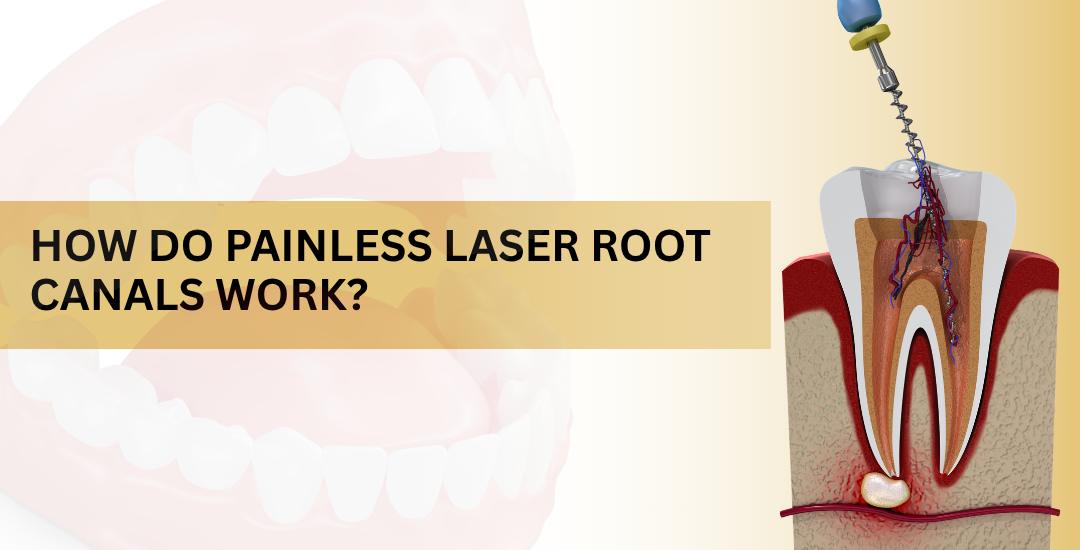
A laser root canal uses focused light energy to remove infected pulp tissue, disinfect canal walls, and seal the tooth with less anesthesia, minimal bleeding, and faster recovery than conventional methods. The laser penetrates dentinal tubules and eliminates bacteria that mechanical files cannot reach, reducing the risk of reinfection. Not all teeth are candidates; curved or calcified canals require assessment before laser application is confirmed.
According to Dr. Namratha Chandrahari,a renowned dentist at Dental Clinic in Banjara Hills, “the photoacoustic streaming effect during laser canal irrigation removes debris from lateral canals that conventional irrigation often misses, which is clinically significant for long-term treatment success.”
What Happens During a Laser-Assisted Root Canal Procedure?
Laser root canal therapy doesn’t replace the entire conventional procedure it enhances specific stages of it, particularly disinfection and irrigation.
Access Opening: A dental handpiece creates the access cavity in the crown first, allowing instruments to reach the pulp chamber before the laser fiber is introduced at any subsequent stage of treatment.
Pulp Removal: Mechanical rotary files remove the bulk of infected pulp tissue from the main canal, which remains standard practice regardless of whether laser adjuncts are applied later in the session.
Laser Disinfection: A thin laser fiber inserted into the cleaned canal delivers photothermal energy along the dentinal walls and inside lateral canals, destroying residual bacteria that sodium hypochlorite irrigation alone doesn’t fully eliminate in complex root anatomies.
Obturation: The disinfected canal is dried and packed with gutta-percha and biocompatible sealer identical materials to conventional endodontics and the tooth is then restored with a filling or crown to recover its full structural function.
Patients undergoing root canal treatment with laser assistance typically complete uncomplicated cases in a single visit, whereas severely infected or retreatment cases may still require a multi-visit conventional protocol depending on clinical findings.
Does Laser Make a Root Canal Truly Painless?
Pain during a root canal is primarily managed through local anesthesia, not the laser itself but laser use does reduce post-operative soreness because photothermal disinfection causes less tissue trauma than aggressive mechanical instrumentation alone.
Anesthesia Role: Local anesthetic blocks nerve conduction completely before the procedure begins, so the laser doesn’t eliminate intraoperative pain independently it works within the anesthetized field to clean more thoroughly with less physical instrumentation force.
Reduced Inflammation: Laser energy carries a biostimulatory effect on periapical tissue, meaning the area around the root tip heals with measurably less swelling, which patients notice as reduced soreness in the 24 to 48 hours following the appointment compared to conventional treatment.
Fewer Visits: Because thorough disinfection is achieved more efficiently, single-visit completion becomes more clinically viable and patients exploring whether a single-visit root canal is actually safe and effective will find the laser-assisted approach is precisely what makes that outcome more predictable.
Drill Reduction: Hard tissue lasers can prepare the access cavity with reduced mechanical drill use, which lowers the vibration and pressure sensation that drives dental anxiety in patients who’ve avoided treatment for years out of fear.
Patients with prior root canal anxiety consistently report that laser-assisted procedures feel less intense not because pain signaling is eliminated differently, but because shorter chair time, fewer instruments, and less post-treatment soreness together change the experience in ways that matter clinically and personally.
Why Choose Dr. Namratha Chandrahari?
The clinic is led by Dr. Namratha Chandrahari is a Prosthodontist and Implantologist with over 12 years of clinical experience and membership in the Royal College of Surgeons in Ireland (MFD RCSI), and her diagnostic approach to endodontic cases including laser-assisted root canals, calcified canal management, and post-endodontic crown restoration reflects the same precision that has made Enamel Dental a referral destination for patients seeking laser dental treatment who’ve been turned away or undertreated elsewhere.
Patient outcomes here reflect a consistent focus on single-visit resolution where clinically appropriate, reduced post-operative discomfort, and long-term crown protection — not just short-term pain relief that leaves the underlying tooth vulnerable to fracture or reinfection within a few years.

Book Your Appointment
Worried about repeated dental visits or discomfort during a root canal procedure?
FAQ
Is laser root canal treatment safe for all patients?
It’s safe for most adults; calcified or curved canals require individual case assessment first.
How long does a laser root canal appointment take?
Most uncomplicated cases are completed in 60 to 90 minutes in a single sitting.
Does laser root canal treatment require more anesthesia?
No it typically requires the same or less local anesthesia than conventional methods.
Can a previously treated tooth be retreated with laser?
Yes, laser-assisted retreatment is clinically effective for cases with residual canal infection.
References
