
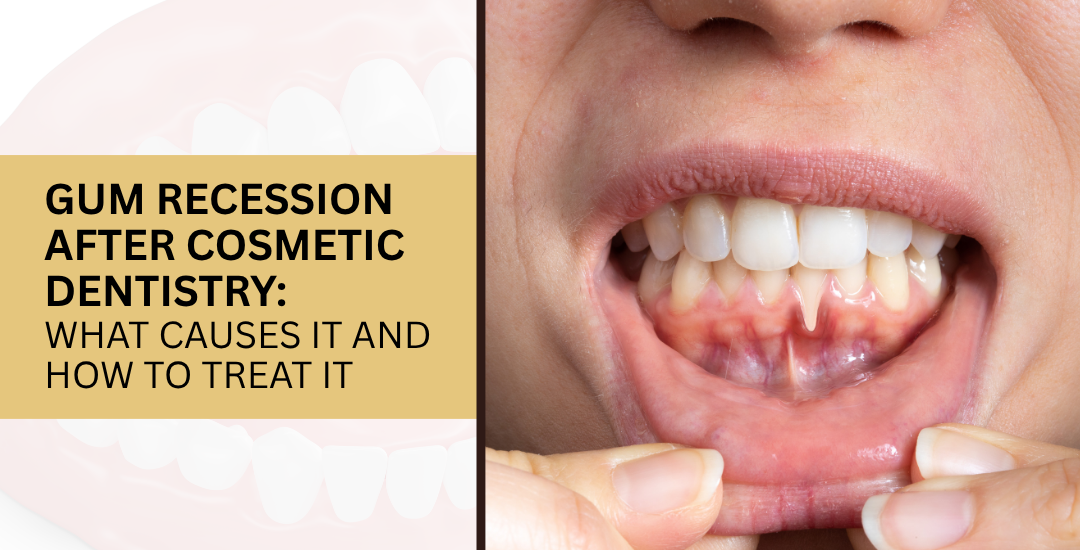
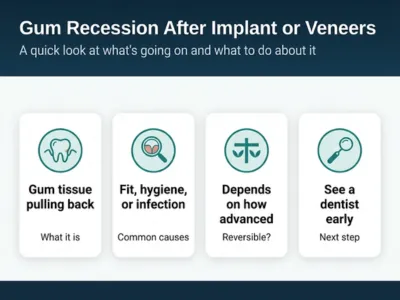
Your gums look different after an implant or veneers. That’s unsettling, no doubt about it. But take a breath first, because gum recession after cosmetic or restorative work happens more than most people expect. In most cases it’s manageable once you actually know what’s causing it, and that’s usually the missing piece.
So what’s the smartest first move? Honestly, a second opinion. From a dentist in Banjara Hills, Hyderabad who had no part in your original treatment, ideally.
A fresh set of eyes tends to settle things fast, whether that’s normal healing, something worth watching, or a real problem brewing. Catch it early and the fix is almost always simpler than people assume.
“Patients often assume any change around an implant or veneer means the treatment failed. It usually doesn’t. Gum recession has a handful of distinct causes, and most respond well once we know exactly what we’re dealing with.”
She sees this kind of case often. Enamel Dental, where she practices, is a dental clinic in Banjara Hills, Hyderabad built around implant and smile reconstruction work specifically.

Book Your Appointment
Not sure if it’s healing or something more? Get a second opinion from a dentist in Banjara Hills, Hyderabad
What Is Gum Recession?
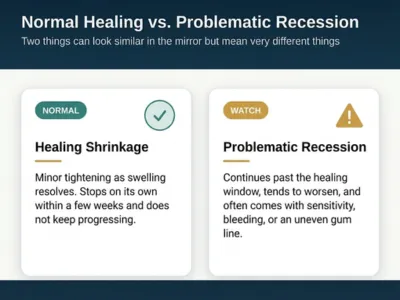
In plain terms, it’s tissue pulling back from a tooth or an implant. That exposes more of whatever sits underneath, the root, the abutment, the margin of a veneer, depending on what you’re dealing with. Some tightening right after a procedure is completely normal, by the way. Swelling goes down, tissue settles into place, and within a few weeks it stops moving on its own. What’s not normal is when it keeps going. Or shows up alongside bleeding, sensitivity, an uneven gum line. That combination is worth a proper look.
Why Gum Recession Happens After Dental Implants
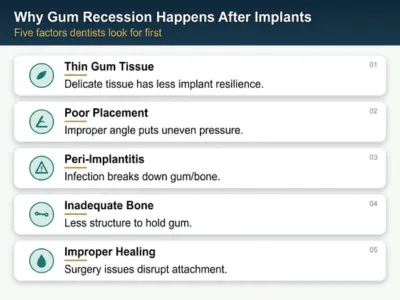
A handful of factors tend to be behind most of these cases, and they’re worth knowing before treatment even starts since they shape how dental implants get planned and placed to begin with.
Tissue type. Placement. Infection. Bone support. How the healing actually went. That’s the shortlist, more or less, and each one calls for a completely different fix. Guessing rarely gets you anywhere here, which is really the whole argument for an accurate diagnosis over a quick assumption.
Why Gum Recession Happens After Veneers
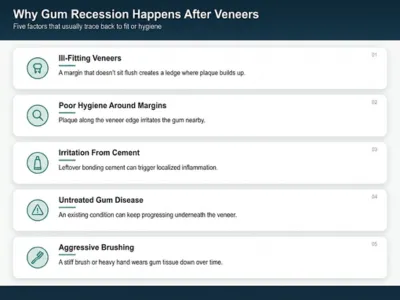
Veneer-related recession usually comes down to fit, hygiene, or something that went untreated before the veneer was placed.
A precise fit heads off most of these problems on its own, which is a big part of why the planning behind porcelain veneers matters just as much as the placement itself, arguably more.
Fit and hygiene explain the bulk of what dentists see. Every so often, though, it’s an existing gum condition resurfacing after the veneer goes in. A thorough checkup beforehand tends to catch that before it becomes a bigger issue.
Symptoms to Watch For
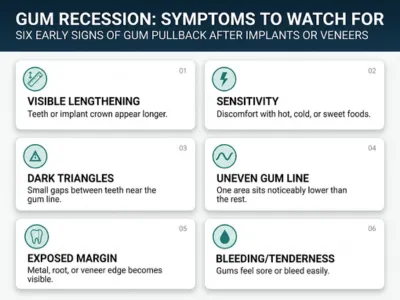
Here’s the tricky part. Recession rarely hurts in the early stages, so people miss it. These are the signs worth actually watching for after implant or veneer treatment.
Book Your Appointment
Noticed one or two of these? It’s worth having it looked at. Schedule an evaluation at Enamel Dental
Is Gum Recession After Implant or Veneers Reversible?
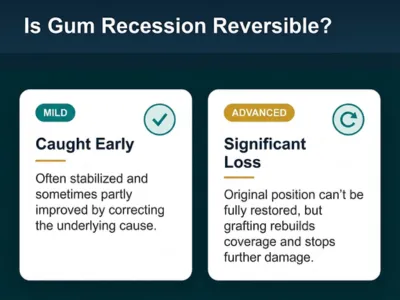
Depends entirely on how far things have gone. Caught early, mild recession can often be stabilized, and sometimes it improves a bit once whatever’s driving it gets corrected, a hygiene habit, a veneer margin, early inflammation, whatever the culprit turns out to be. Advanced recession is a tougher ask, though. Once real tissue and bone are gone, that’s gone. Grafting can still rebuild coverage and stop things from getting worse. It just won’t fully turn back the clock, and it helps to know that going in.
When to Contact Your Dentist
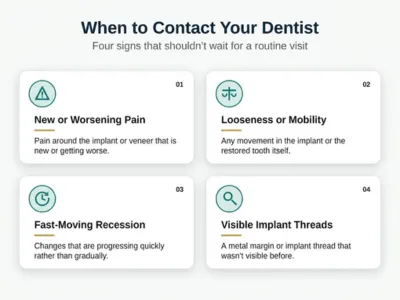
Recognize any of these? Call your dentist in Banjara Hills, Hyderabad sooner rather than later. Waiting almost never helps here, and it tends to just make the eventual treatment more involved than it needed to be.
Book Your Appointment
The right treatment starts with the right diagnosis. Talk to Enamel Dental about your options
Treatment Options for Gum Recession
There’s no single fix for this. None, really. That’s exactly why getting the diagnosis right matters more than anything that happens afterward. Once the cause is clear, treatment usually lands in one of these categories below.
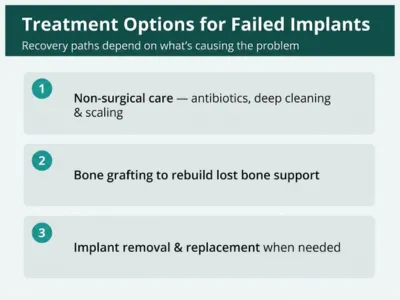
For mild, early cases, laser-assisted dental treatment at Enamel Dental is often all that’s needed, and it tends to mean gentler healing with noticeably less discomfort.
How to Prevent Further Gum Recession
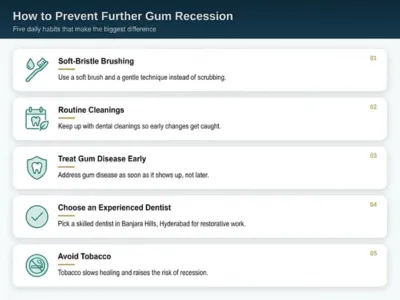
A gentle brushing habit. Regular cleanings. The right dentist for any restorative work. None of it is complicated, truthfully. It just has to be consistent, which is the part people tend to skip.
Book Your Appointment
Noticing changes around an implant or veneer? A second opinion tells you exactly where things stand.
FAQ
Is it normal to have some gum recession after getting an implant or veneers?
A little settling in the first few weeks, sure, totally normal, don’t stress over that. If it keeps going past that window though, or you notice sensitivity or bleeding creeping in, get it looked at rather than waiting it out.
Can gum recession around a veneer be fixed without replacing the veneer?
Sometimes, yes. If the veneer itself fits fine and the real issue is hygiene or gum health, treating the gum directly can be enough on its own. But if the margin is actually the problem, the veneer usually has to be adjusted or swapped out entirely.
How do I know if my gum recession is from poor oral hygiene or a dental issue?
Hard to say just from looking in the mirror, if we’re being honest. A lot of causes look nearly identical from the outside. A dental exam, sometimes with imaging thrown in, is really the only reliable way to separate hygiene from a fit, placement, or infection problem.
Can gum grafting be done around an existing implant or veneer?
Yes, around both. The approach just changes a bit depending on what’s actually being protected.
Will gum recession expose the metal part of my implant?
In the more advanced cases, yes, it can. Seeing implant threads or connecting metal is a pretty reliable signal that treatment shouldn’t sit on the back burner any longer.
How long does it take for gums to recede after implant placement?
It varies a lot more than people expect. Sometimes just weeks, if placement or healing didn’t go quite right. Other times it’s a slow creep over months or years, often tied back to peri-implantitis or bone loss somewhere along the way.
Does gum recession affect the lifespan of my implant or veneer?
It can, yes. Left alone, it may weaken implant support or gradually change how a veneer sits and looks. Early treatment tends to be the better bet here, pretty consistently, compared with just waiting and seeing.
Disclaimer: The information shared in this content is for educational purposes only and not for promotional use..
