
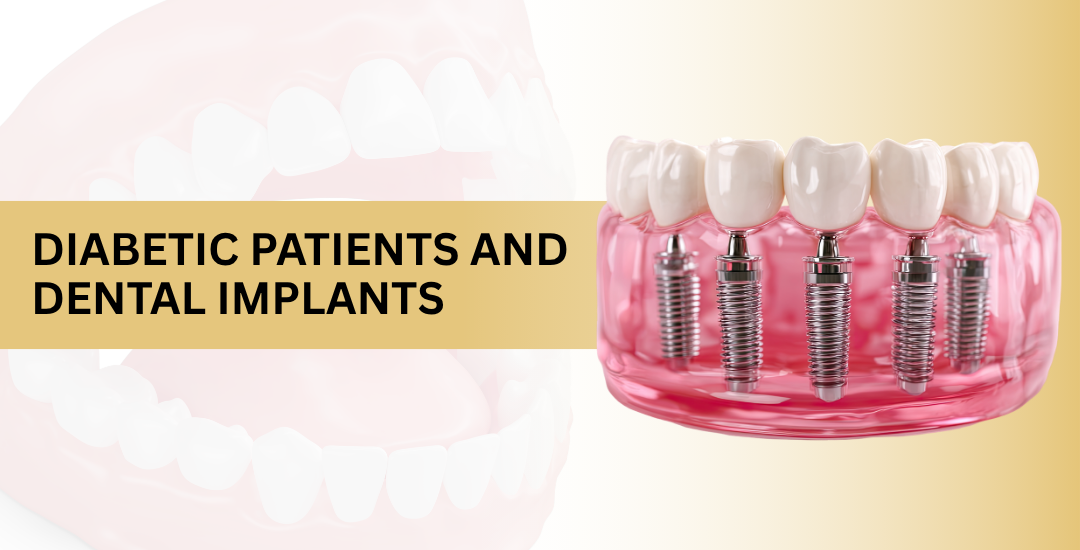
Dental implants work for diabetic patients when blood glucose is properly managed before and after surgery. Survival rates in well-controlled diabetic patients reach 96.1% to 97.3% at one year, figures that sit alongside non-diabetic populations in published clinical data. HbA1c is the deciding number, and anything below 8% puts a diabetic patient in a manageable risk category. Above 10%, osseointegration becomes unpredictable and peri-implantitis risk climbs sharply. A prosthodontist reviews HbA1c, healing history, and systemic health before any implant decision gets made.
Dr. Namratha Chandrahari, a renowned dentist at Dental Clinic in Banjara Hills, patients with diabetes are not ruled out for implants, but glycemic control at the time of surgery determines whether bone will bond to the implant the way it should.
What Conditions Must Be Met for Diabetic Patients to Receive Dental Implants?
Not every diabetic patient qualifies. What needs to be in place before surgery is considered:
HbA1c below 8%: This is where the evidence clusters. Below this level, osseointegration proceeds close enough to non-diabetic rates that implant placement becomes a reasonable clinical decision.
Recent blood test, not a day-of reading: The test needs to be done within two to three months before surgery. A fasting glucose on assessment day tells very little about what has actually been happening in the body.
Antibiotics and chlorhexidine, both: Not one or the other. Studies on diabetic implant patients specifically support this combination for cutting early infection risk during the healing phase.
More time before loading the implant: This is non-negotiable. Bone takes longer to integrate around the implant in diabetic patients, full stop.
For patients who meet these conditions, dental implants remain the most stable permanent tooth replacement available.
What Risks Do Diabetic Patients Face With Dental Implants and How Are They Managed?
Most risks here are manageable. They do not manage themselves.
Peri-implantitis moves faster: Gum tissue inflammation runs higher in diabetic patients, so professional maintenance every three to four months is not a recommendation. It is the protocol.
Soft tissue is slower to close after surgery: Hyperglycemia reduces collagen output and restricts blood flow to healing tissue, which is why glucose tracking after placement is built into the care plan rather than left to the patient’s GP.
Bone density is not always reliable: Poorly controlled diabetes over years affects the trabecular structure where the implant anchors. A single-tooth implant in that situation needs its own site assessment before placement is confirmed.
Watch the first two years closely: Marginal bone loss caught at six months is a minor correction. Caught at year two, it is often a bigger problem. Radiographic checks run more frequently in this patient group early on.
If you have not decided on implant suitability yet Full Mouth Implant Guide covers the full process from assessment through to loading.
Why Choose Dr. Namratha Chandrahari?
Dr. Namratha Chandrahari has placed over 10,000 implants at Enamel Dental, Banjara Hills, Hyderabad, and holds MDS Prosthodontics and MFD RCSI qualifications. Complex medical cases including diabetic patients with modified healing protocols are a regular part of the caseload here, not exceptions.
Diabetic patients do not get a standard plan here. Blood work gets reviewed, healing timelines get adjusted, and the protocol gets built around the patient’s actual numbers before the first appointment is confirmed.

Book Your Appointment
Managing diabetes and weighing tooth replacement options?
FAQ
Can Type 2 diabetic patients get dental implants?
Yes, when HbA1c is below 8% and systemic health clears them for surgery.
What HbA1c level is safe before implant surgery?
Below 8%. That is where clinical evidence supports proceeding with implant placement.
Are failure rates higher in diabetic patients?
Not significantly when glucose is well controlled through the treatment period.
Does healing take longer for diabetic patients after implants?
It does. Osseointegration is slower and follow-up runs more frequently as a result.
Disclaimer:
This blog is for educational and informational purposes only and should not be considered professional advice.
