
Banjara Hills · Hyderabad
Surgical Wisdom Tooth Extraction in Banjara Hills
Sometimes a wisdom tooth just gets stuck. It’s trapped under the gum or bone and can’t come up properly, which dentists call impacted. Ignore it for long enough and it may get infected, decay, or press on the tooth beside it. That’s usually the point where surgery gets discussed. Whatever you’re dealing with, you’ll be examined first at Enamel Dental, and we’ll go through the choices with you before anything is decided.
Painful or stuck wisdom tooth? Get it checked by Dr. Namrata at Enamel Dental, Banjara Hills.
What Are Zygomatic Dental Implants?
Quick answer
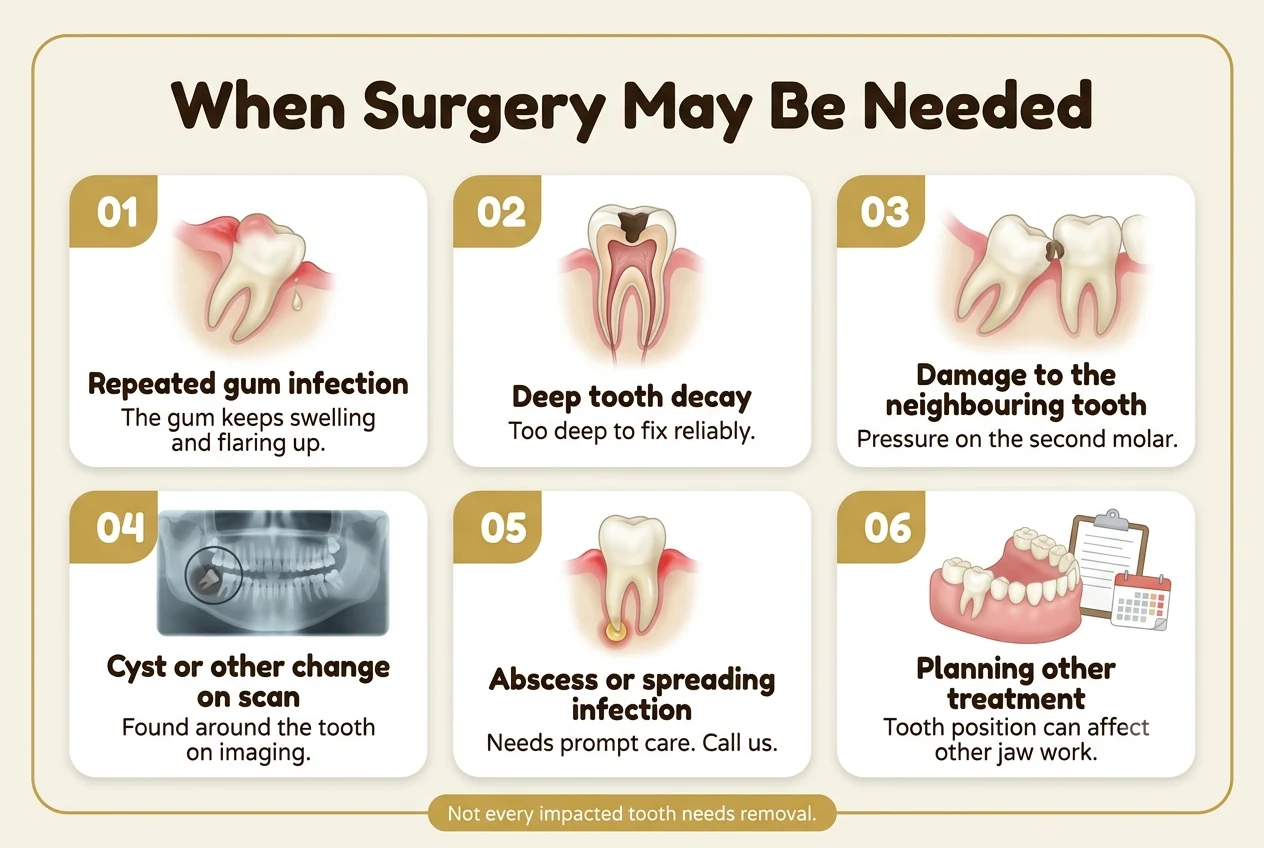
Surgery is needed when an impacted tooth keeps causing gum infections, deep decay, damage to the molar beside it, or a cyst or abscess. A healthy tooth that gives no trouble can usually just be monitored.
Clinical note
A tooth is worth removing when the exam or scan turns up decay, infection, an abscess, a cyst or harm to its neighbour. Three things guide the decision: the tooth’s condition, its position, and what surgery itself could risk.
This is in line with national guidance too. The NICE guidance on wisdom tooth extraction and the NHS page on wisdom tooth removal both say a wisdom tooth should come out only when there’s a clear problem, not just because it’s there.
Does the angle of the tooth matter? To a point, yes. Here are the types of impacted wisdom teeth we see.
What Are the Types of Impacted Wisdom Teeth Treated by Dr. Namrata at Enamel Dental?
Quick answer
Dr. Namrata at Enamel Dental treats four types of impacted wisdom teeth, named for their angle: vertical, horizontal, mesioangular and distoangular. The angle gives a hint of how awkward removal might be. It doesn’t decide, by itself, whether you need surgery.
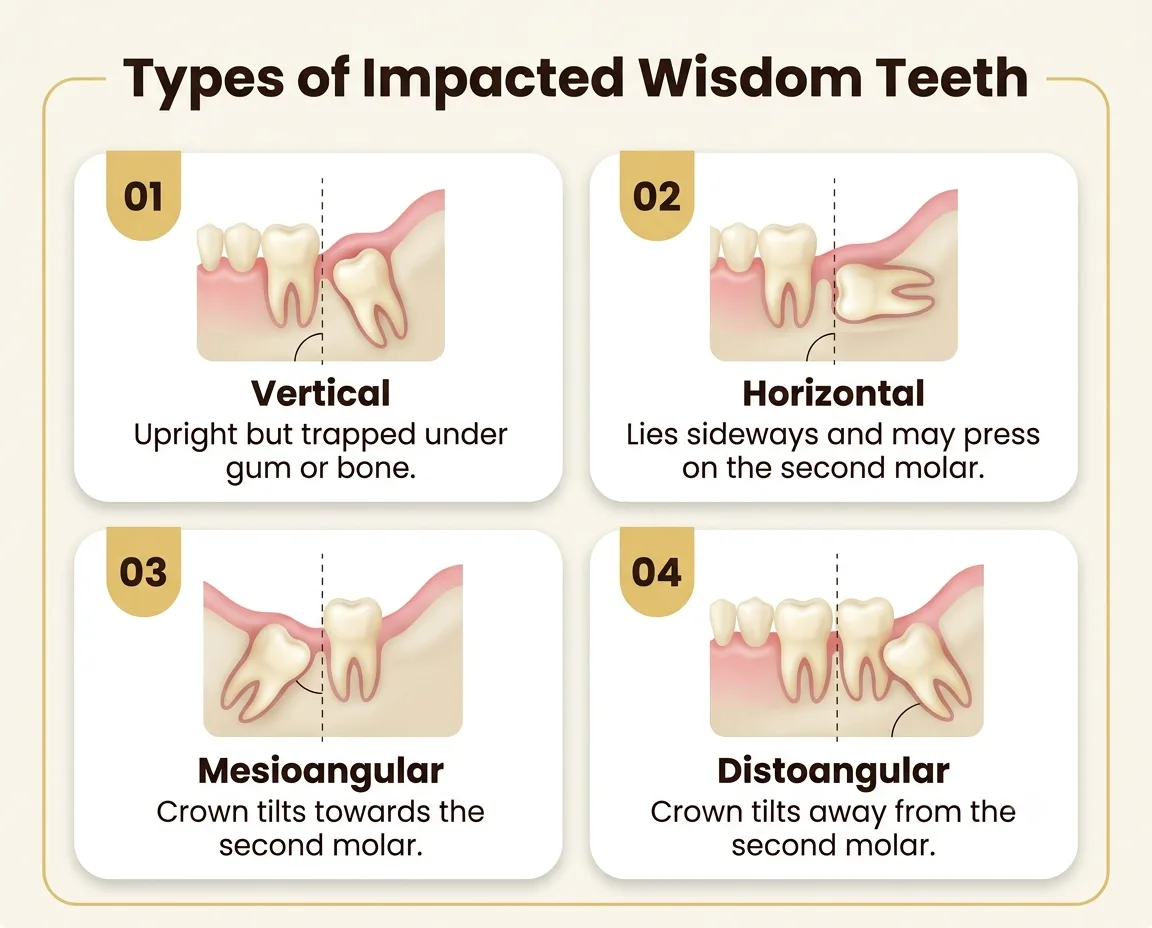
Two people with the same type can end up with different treatment. Say a mesioangular tooth has already caused decay in the second molar. That needs a different plan from a healthy vertical tooth that’s only partly under the gum. At Enamel Dental, your X-ray shows which type you have, and Dr. Namrata plans your treatment from there.
We only suggest removal when the exam or scan turns up a real problem, like decay, infection or damage.
That X-ray is a big part of the picture, so here’s how the assessment works.
What Is Dr. Namrata’s Approach to Wisdom Tooth Assessment and Oral Surgery?
Quick answer
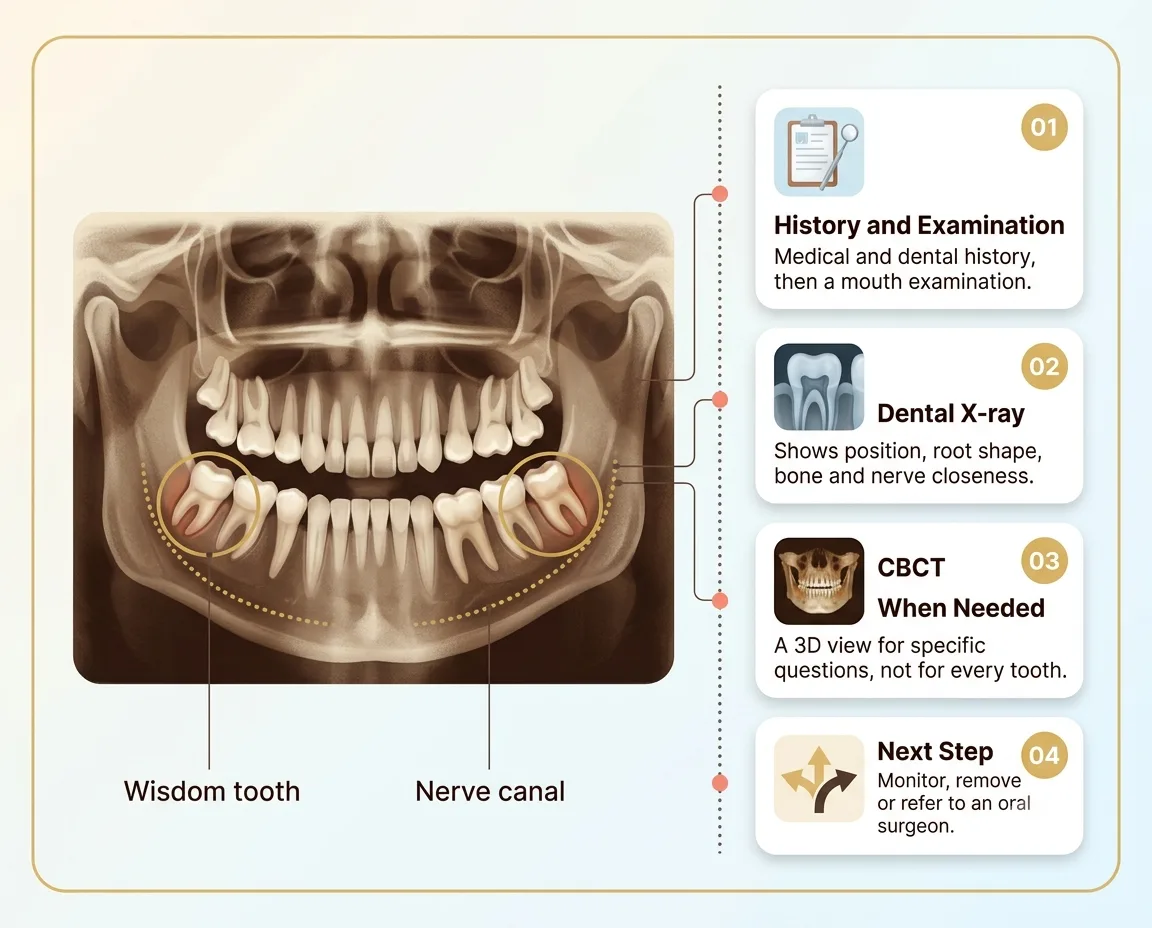
At Enamel Dental, Dr. Namrata starts with your history and a look inside your mouth, followed by an X-ray in most cases. A CBCT scan is added only when the X-ray isn’t enough. Teeth that are buried deep, sit close to the jaw nerve, or come with health complications are where oral surgeon wisdom tooth extraction makes more sense.
Two people with the same type can end up with different treatment. Say a mesioangular tooth has already caused decay in the second molar. That needs a different plan from a healthy vertical tooth that’s only partly under the gum. At Enamel Dental, your X-ray shows which type you have, and Dr. Namrata plans your treatment from there.
We only suggest removal when the exam or scan turns up a real problem, like decay, infection or damage.
That X-ray is a big part of the picture, so here’s how the assessment works.
What Happens During Wisdom Tooth Extraction Surgery at Enamel Dental?
Quick answer
Wisdom tooth extraction surgery at Enamel Dental has six stages: assessment and consent, anaesthesia, access and removal, cleaning, closure, and aftercare advice. Local anaesthesia is what most patients have. You’ll feel pressure and pushing, but not pain.
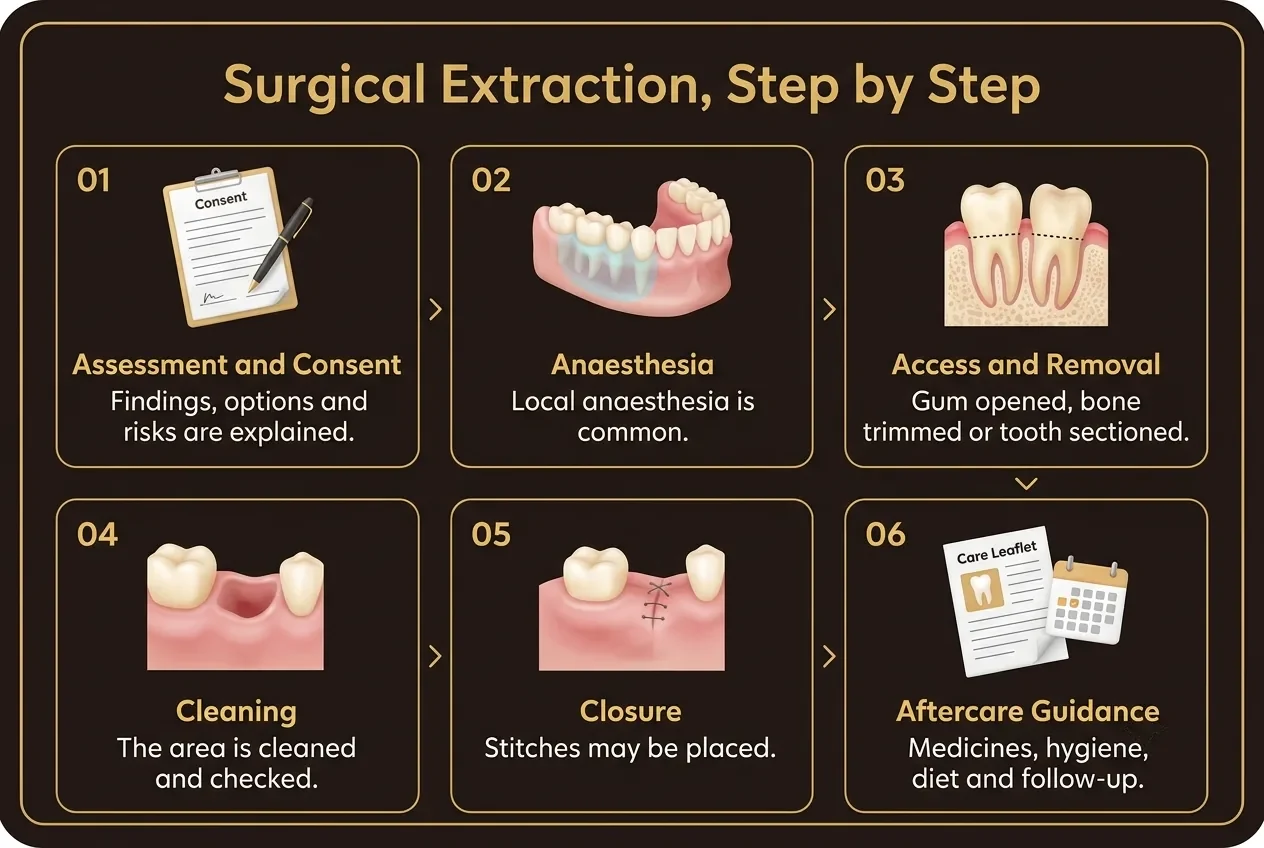
At Enamel Dental it’s usually done in a single visit. While Dr. Namrata works you’ll feel pressure and some movement, but the area stays numb.
Some patients need sedation or general anaesthesia, for instance if you’re very anxious or the tooth is a tricky one. If that’s you, let us know before the day so we can plan for it.
And once the numbness fades? Recovery is next.
What Is Recovery Like After Wisdom Tooth Surgery?
Quick answer
For a few days after wisdom tooth surgery you may have pain, swelling, bruising or a stiff jaw. It builds for the first two or three days and then eases. Allow up to two weeks to feel fully back to normal.
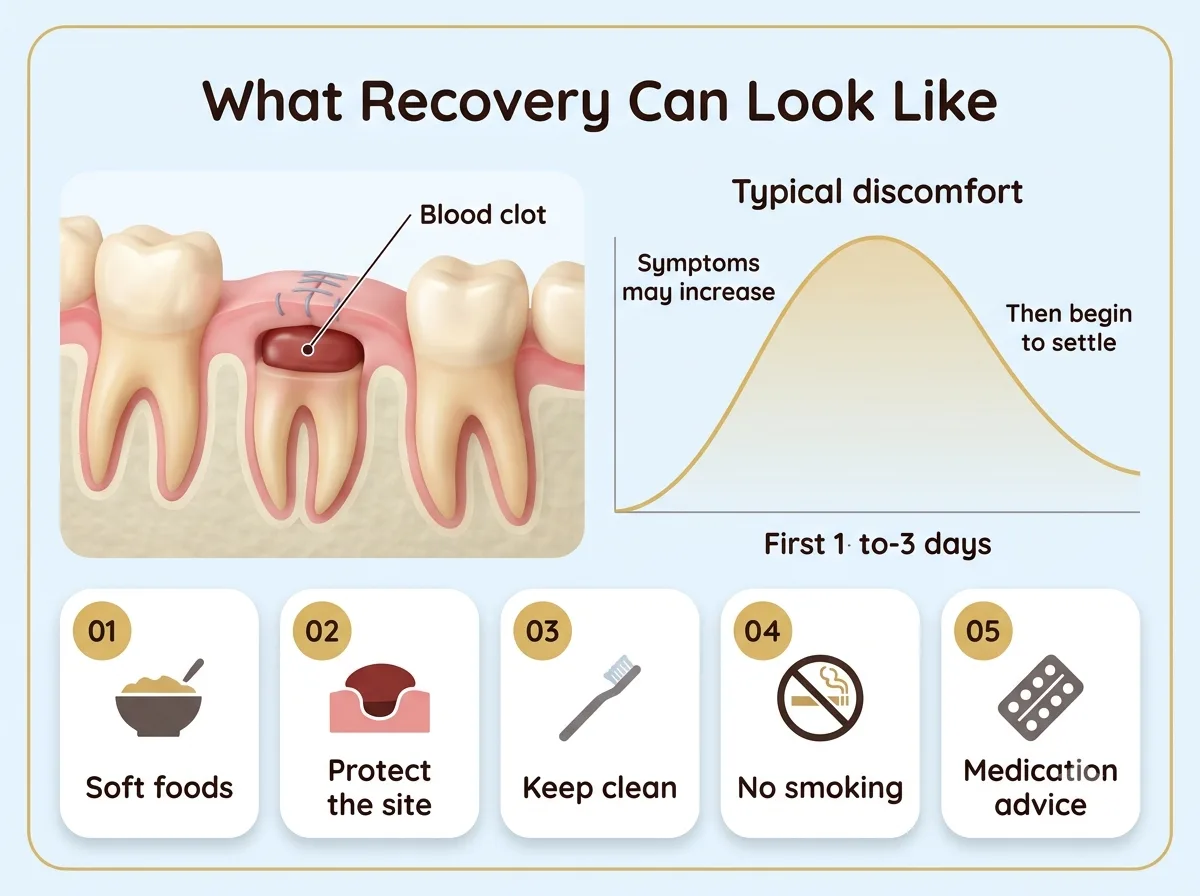
A blood clot forms in the socket, and it’s doing real work: it shields the bone and starts the healing. So leave it alone. For the first 24 hours, no hard rinsing or spitting, and no hot drinks, alcohol, smoking or straws. Any of those can pull the clot out. Eat soft food. Clean your mouth the way we’ve shown you, and only take medicines that we or your doctor have advised. Bruising and swelling can stay for 7 to 10 days.
Dry socket is the one to watch for. It happens when the clot is lost, usually two to five days after surgery. You’d get a throbbing ache, and sometimes a bad taste or smell. Smoking and ignoring the aftercare instructions make it more likely. If that sounds familiar, call us. A medicated dressing and pain relief usually help.
Important aftercare – when should you call the clinic?
If healing isn’t going the way it should, get in touch. The signs below are worth a check.
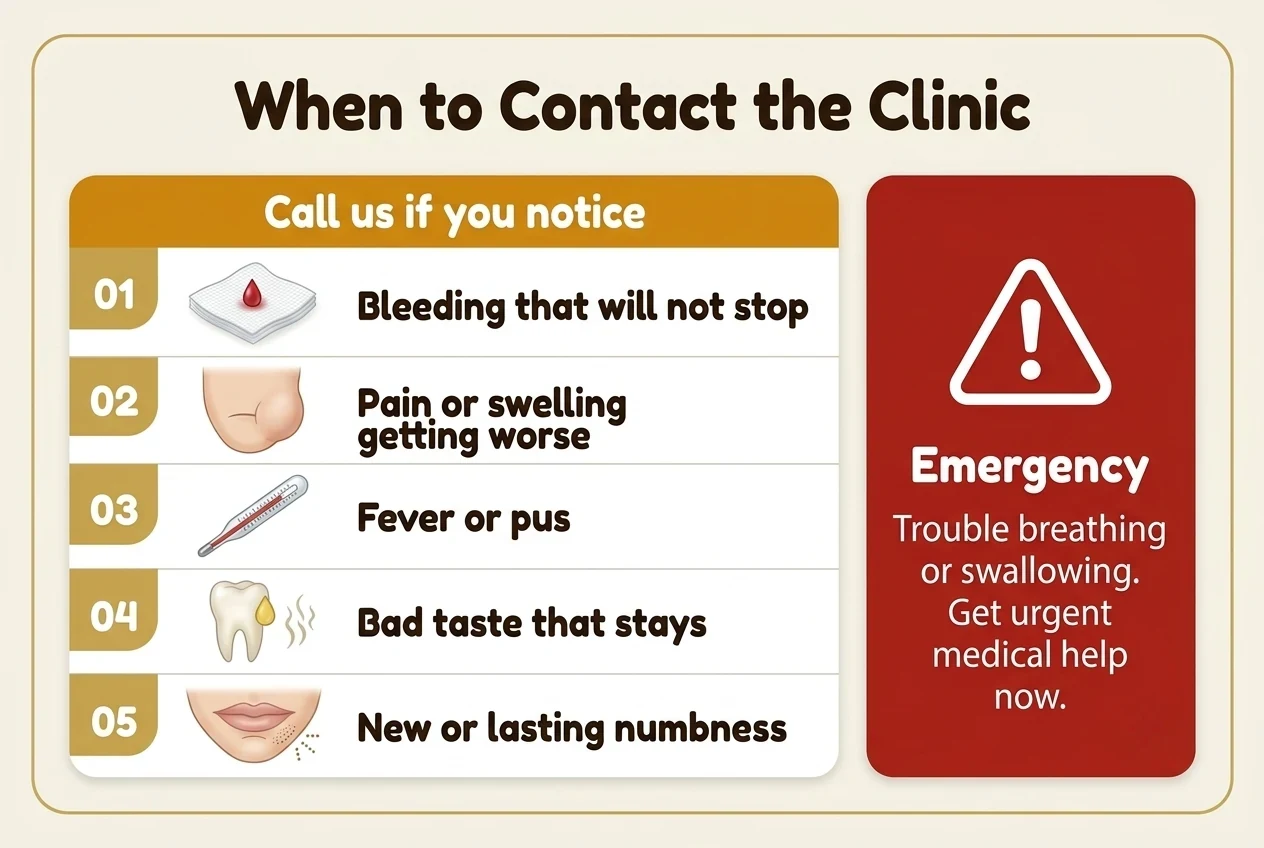
Struggling to breathe or swallow? That’s an emergency. Get medical help right away.
Not sure if what you’re feeling is normal? We’d much rather hear from you early.
Every surgery has risks, and you should hear them before the day, not after.
What Is Recovery Like After Wisdom Tooth Surgery?
Possible risks of wisdom tooth extraction include:
- Bleeding and swelling in the first few days
- Infection at the surgical site
- Dry socket if the blood clot is lost, usually 2 to 5 days after surgery
- Slow healing or a stiff jaw
- Nerve injury (rare): numbness, tingling or pain in the lower lip, chin or tongue. It settles in weeks or months for most people, and rarely stays
- Damage to nearby teeth (rare)
- Higher risk with smoking, poor oral hygiene, blood thinners or diabetes. Tell us about your medicines and health history at your consultation
Source: NHS: Wisdom tooth removal.
Then there’s the question almost everyone asks: what will it cost?
What Affects Surgical Wisdom Tooth Extraction Cost in Banjara Hills?
Quick answer
The cost of surgical wisdom tooth extraction in Banjara Hills depends on the tooth and the plan. After Dr. Namrata has examined you and seen your X-ray, you get an estimate.
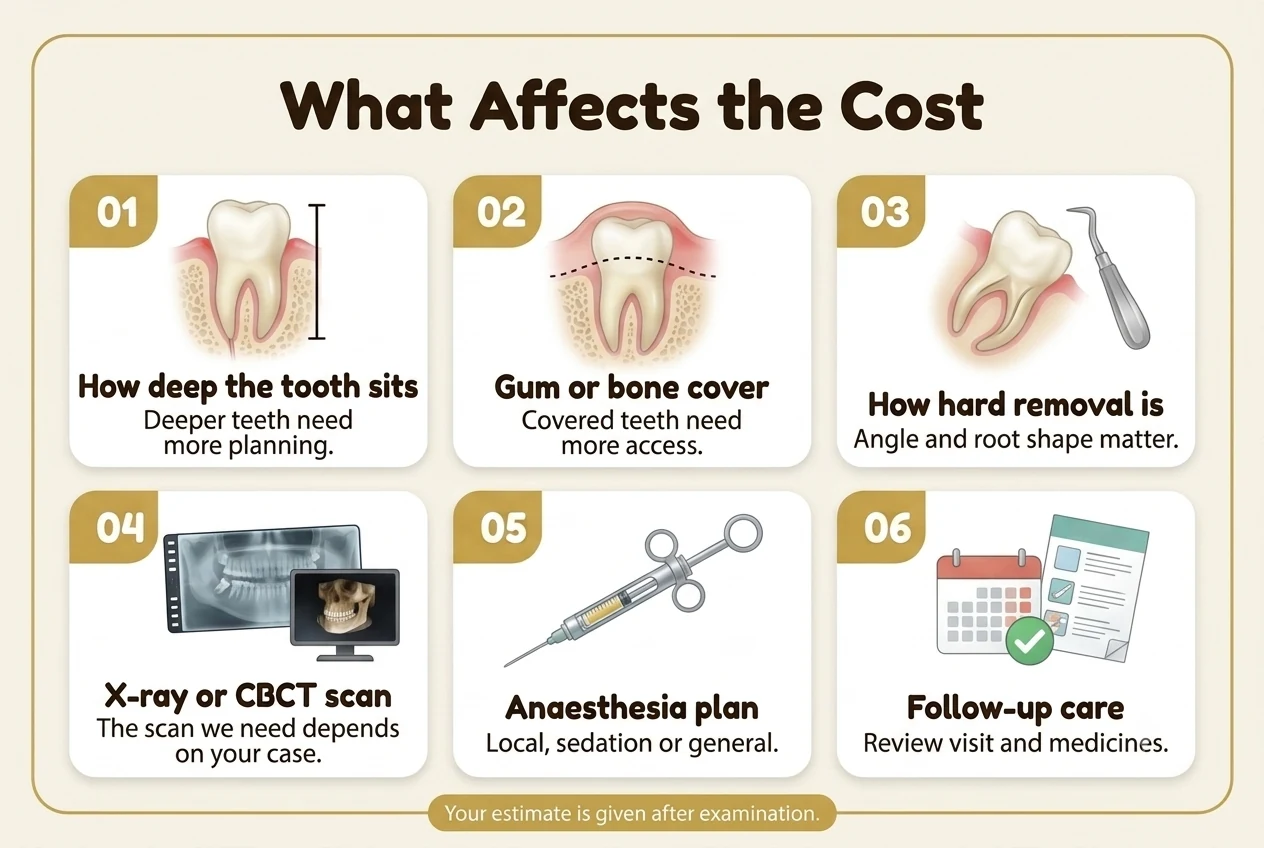
- Position of the tooth: how deep it sits, and how much gum or bone covers it
- Difficulty of removal: curved roots or a tooth that needs sectioning take longer
- Imaging: a standard X-ray, or a CBCT scan if needed
- Anaesthesia: local, sedation or general
- Medicines and follow-up visit
- What the quote includes: ask whether the X-ray, anaesthesia, medicines and review visit are covered. A cheaper quote that leaves them out may not end up cheaper
Where Can You Read More About Wisdom Teeth and Recovery?
Want to read more? These Enamel Dental articles cover wisdom tooth problems in adults, and symptoms that can show up weeks after an extraction.
Wisdom Teeth Removal After Age 30: Is It Too Late?
Swollen Cheek 3 Weeks After Wisdom Teeth Removal
Jaw Pain 3 Weeks After Wisdom Tooth Extraction – Should You Be Worried?
Not Sure Whether Your Wisdom Tooth Needs Surgery?
Book an assessment at Enamel Dental in Banjara Hills. We’ll look at your symptoms and where the tooth is sitting, and then tell you straight: watch it, treat it, or see a specialist.
Frequently Asked Questions
The same few questions come up again and again: is surgery always necessary, how is it different from a simple extraction, how long does recovery take, and what does it cost?
1. Does every impacted wisdom tooth need surgery?
Not at all. An impacted tooth that’s healthy, with no sign of disease, can simply be monitored. We’d suggest impacted tooth extraction only if an exam or scan shows disease, damage, or some other clear reason.
2. How is wisdom tooth extraction surgery different from a simple extraction?
Surgery may mean a cut in the gum, some bone removed, or the tooth divided into sections. A simple extraction is for a tooth that’s fully through the gum and easy to grip.
3. Will I be awake during the procedure?
In most cases, yes. The area is numbed with local anaesthesia. For some patients, sedation or general anaesthesia is the better choice, depending on the tooth and how involved the procedure is.
4. How long does recovery from wisdom tooth surgery take?
Everyone heals a bit differently. Pain, swelling and a stiff jaw usually peak over the first two or three days and then fade. You might need up to two weeks to recover fully. If things are getting worse rather than better, call us.
5. Can a wisdom tooth be close to a nerve?
Sometimes. Lower wisdom tooth roots can sit near the nerve that supplies the lower lip, chin and tongue, and imaging shows us how close they are. Nerve injury is uncommon and usually temporary. We go over it with you before you consent.
6. What is the surgical wisdom tooth extraction cost in Banjara Hills?
It depends on the tooth’s position, how complex the surgery is, and the imaging and anaesthesia you need. We can’t quote fairly without seeing the tooth, so we give you an estimate after your assessment.
7. When would I need an oral surgeon for wisdom tooth extraction?
When the tooth is buried deep, presses right up against the jaw nerve, or your health history adds risk. We tell you at the assessment if an oral surgeon is the better choice.
Disclaimer: The information shared in this content is for educational purposes and not for promotional use.