All-on-6 Dental Implants for Aggressive Periodontitis in a 70-Year-Old Female
Doctor’s Name:
Dr. Namratha Chandrahari
Patient
Age / Gender
Diagnostic Method
Clinic
Enamel Dental Clinic, Banjara Hills, Hyderabad
Chief Complaint
Treatment
Aesthetic Outcome
Overall Assessment
Functional Outcome
Patient Background
Sulochana Agarwal, a 70-year-old female from Hyderabad, presented to Enamel Dental Clinic in Banjara Hills with a two-decade history of progressively worsening tooth mobility. She reported that her teeth had been loosening gradually since her late forties, with the condition accelerating markedly in recent years to the point where several teeth were no longer functionally serviceable. This extended history of untreated periodontal breakdown had resulted in significant loss of the supporting bone and soft tissue architecture around the majority of her remaining dentition.
Given the chronicity and extent of the underlying disease process, a conservative periodontal maintenance approach was no longer clinically viable. Following detailed evaluation, the treatment plan was directed toward a full-arch, implant-supported rehabilitation. All-on-6 implant placement was identified as the appropriate intervention, offering a stable, bone-anchored foundation to replace the compromised natural dentition and restore long-term oral function.
Presenting Symptoms
The clinical presentation at Enamel Dental documented the following findings in Sulochana Agarwal’s case:
Generalised tooth mobility of long standing.
Advanced periodontal bone loss.
Compromised occlusal function.
Risk of further natural tooth loss.
Aesthetic concerns.
Reduced quality of life.
These presenting findings reflected a case of advanced, long-standing periodontal disease in which the remaining natural dentition no longer offered a predictable foundation for restorative treatment. A full-arch implant-supported solution was required to provide the fixed, bone-anchored stability that the periodontally compromised teeth could no longer sustain.
Diagnostic Method
A comprehensive clinical periodontal examination was carried out to assess the degree of attachment loss, tooth mobility, and residual bone support across the affected arch. Given the extent and duration of the disease process, detailed three-dimensional imaging was essential to accurately plan the extent of extractions and the subsequent implant rehabilitation.
A CBCT (Cone Beam Computed Tomography) scan was obtained to generate a precise three-dimensional map of the remaining alveolar bone. The scan quantified the available bone height, width, and density at each potential implant site following planned extractions, and identified the spatial relationship of these sites to critical anatomical landmarks. In a case of aggressive periodontitis with generalised bone loss, this imaging was essential to confirm which regions of the arch retained sufficient bone volume to support primary implant stability without additional grafting.
The CBCT findings were used to finalise implant positioning and angulation, ensuring that each of the six planned implants would be placed within sound, well-supported bone.
Diagnosis
Clinical and radiographic evaluation confirmed a diagnosis of aggressive periodontitis, with generalised advanced bone loss and tooth mobility affecting the majority of the remaining natural dentition. The chronic, 20-year progression of the disease, combined with the extent of attachment loss visible on CBCT imaging, indicated that the affected teeth had a poor long-term prognosis and were unsuitable for retention or conventional periodontal salvage.
The clinical findings supported a full-arch rehabilitation strategy employing All-on-6 implant placement. This approach was selected on the basis of its ability to deliver a fixed, bone-anchored restoration independent of the compromised periodontal support that had failed the patient’s natural teeth. This is comparable to the approach taken in another All-on-6 full mouth implant case treated at the same clinic, where a fixed prosthetic solution was similarly chosen over removable options.
Treatment Plan
A comprehensive All-on-6 implant rehabilitation plan was developed, incorporating the following clinical steps:
- Preoperative assessment and surgical mapping: CBCT data was used to identify sound bone sites within the arch, planning implant positions that would avoid areas of significant periodontal bone loss and provide adequate primary stability.
- Extraction of non-restorable teeth: Teeth affected by advanced periodontal disease and assessed as non-salvageable were planned for extraction as part of the same treatment sequence, clearing the arch for implant placement.
- Placement of six dental implants: All-on-6 implant placement was planned, with implants positioned to engage the most stable available bone and to distribute prosthetic load evenly across the arch.
- Immediate provisional fixed prosthesis: A temporary fixed prosthesis was incorporated into the treatment sequence to restore function promptly and allow the patient to adapt during the healing and osseointegration period.
- Final definitive All-on-6 fixed prosthesis: Following confirmed osseointegration, a definitive fixed implant-supported prosthesis was planned for placement, restoring masticatory function and aesthetics on a stable, long-term basis.
Surgical Procedure
The surgical procedure was performed under local anaesthesia, maintaining strict aseptic technique throughout. Non-restorable teeth affected by advanced periodontal disease were extracted first, followed by careful debridement of the extraction sites to remove residual inflamed tissue.
Six dental implants were placed in accordance with the CBCT-guided surgical plan, positioned within the areas of the arch identified as retaining adequate bone volume and density. Implant angulation was selected to maximise engagement with sound bone and to achieve favourable distribution of functional load across the arch, an important consideration given the history of generalised periodontal bone loss.
Primary stability was verified at each implant site through insertion torque assessment prior to prosthetic loading. A provisional fixed bridge was secured on the day of surgery, allowing the patient to leave the clinic with functional, fixed teeth. Careful soft tissue handling and atraumatic surgical technique were maintained throughout to support uneventful early healing.
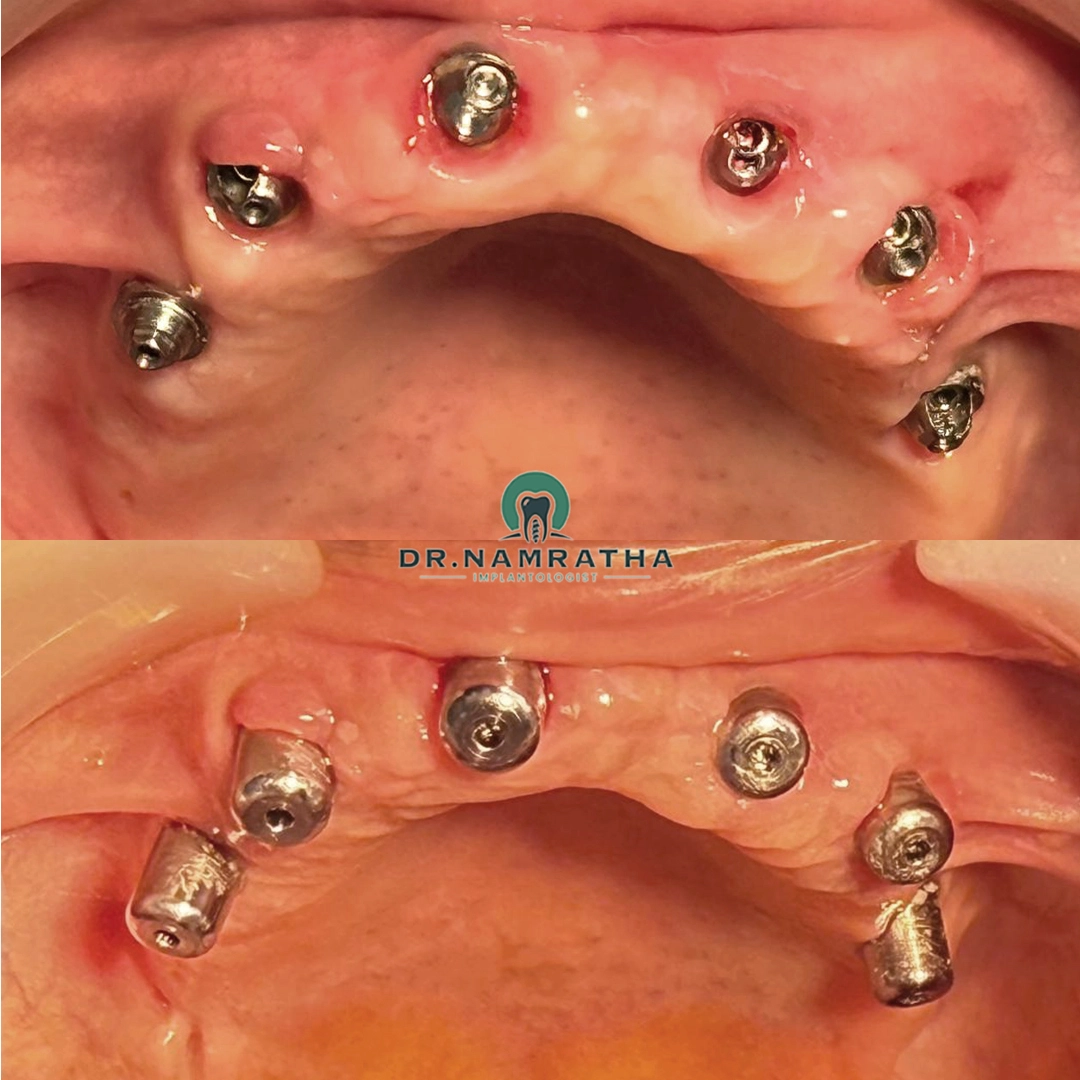
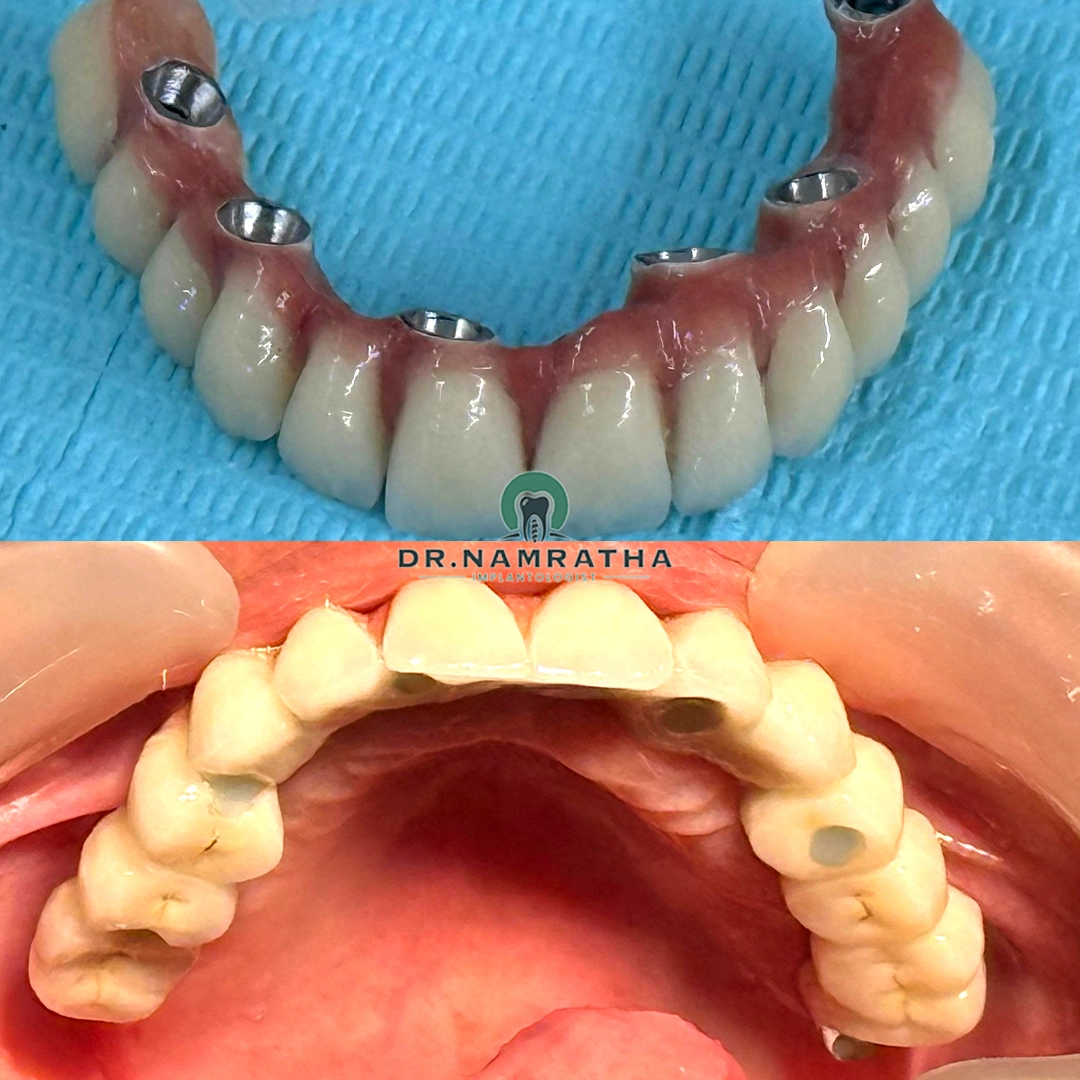
Six implants placed in the arch — upper and lower intraoral views
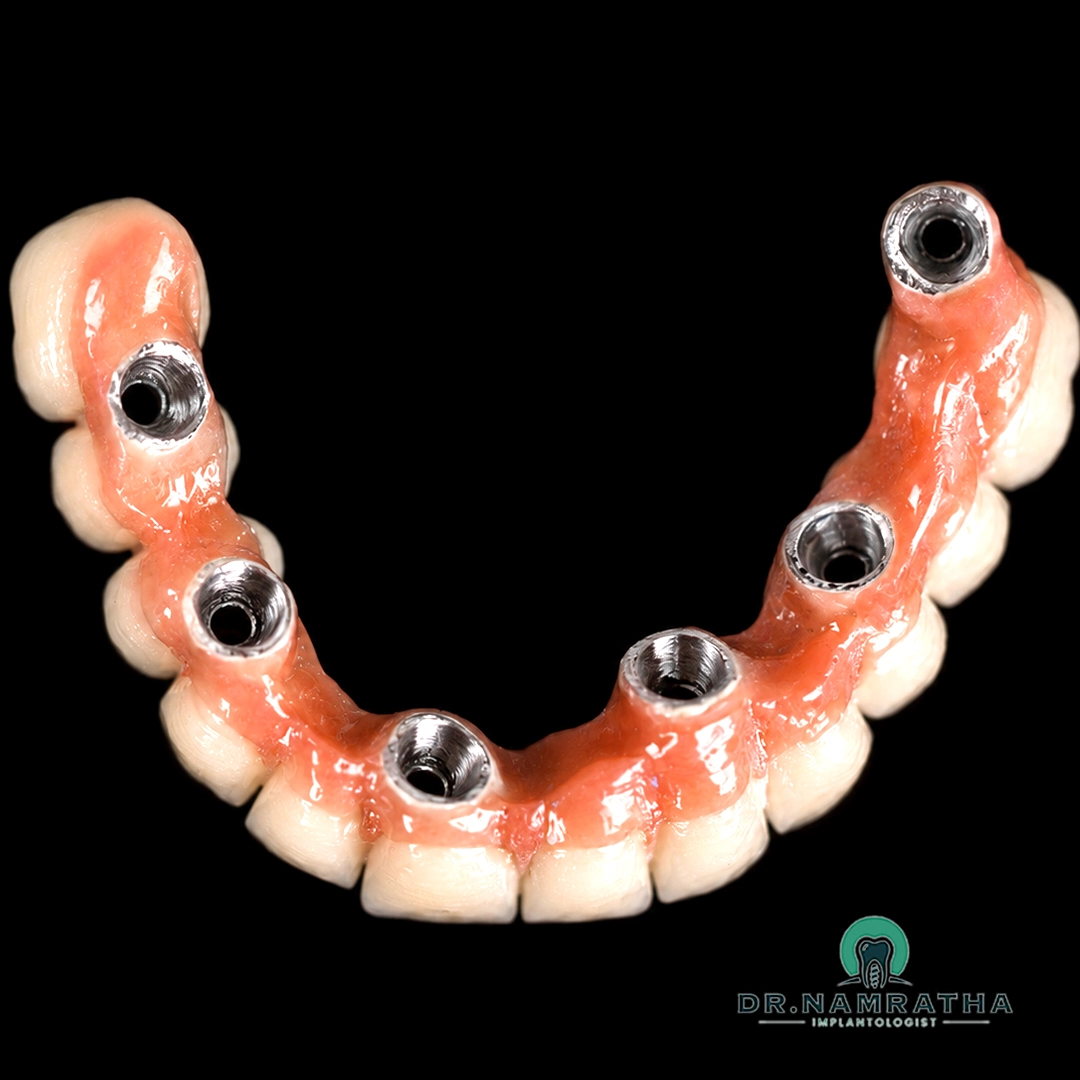
The intaglio (fitting) surface of the definitive All-on-6 fixed prosthesis
Post-Surgery Care and Guidelines
Detailed post-operative instructions were provided to the patient to support healing and protect the newly placed implants:
- Oral hygiene protocol: Gentle brushing with a soft-bristled toothbrush was to begin from day two post-operatively. Chlorhexidine mouthwash rinses were prescribed for the first two weeks, with interdental and water flosser use introduced once early tissue healing was confirmed.
- Dietary guidelines: A soft diet was advised for the initial healing period, with gradual reintroduction of firmer foods as osseointegration progressed. Hard and sticky foods were to be avoided until prosthetic stability was confirmed.
- Medication compliance: Prescribed antibiotics were to be completed in full, with analgesics and anti-inflammatory medication taken as directed to manage post-operative discomfort.
- Behavioural restrictions: Adequate rest was advised for the first 48 hours following surgery, with tobacco and alcohol use strictly avoided during the healing phase due to their adverse effect on osseointegration.
- Periodontal monitoring: Given the patient’s history of aggressive periodontitis, close monitoring of peri-implant soft tissue health was prioritised at each review, to detect any early signs of inflammation and maintain long-term implant health.
- Follow-up protocol: A structured review schedule was arranged to monitor osseointegration, assess peri-implant tissue condition, and confirm the functional and mechanical integrity of both the provisional and definitive prostheses.
Outcomes & Results
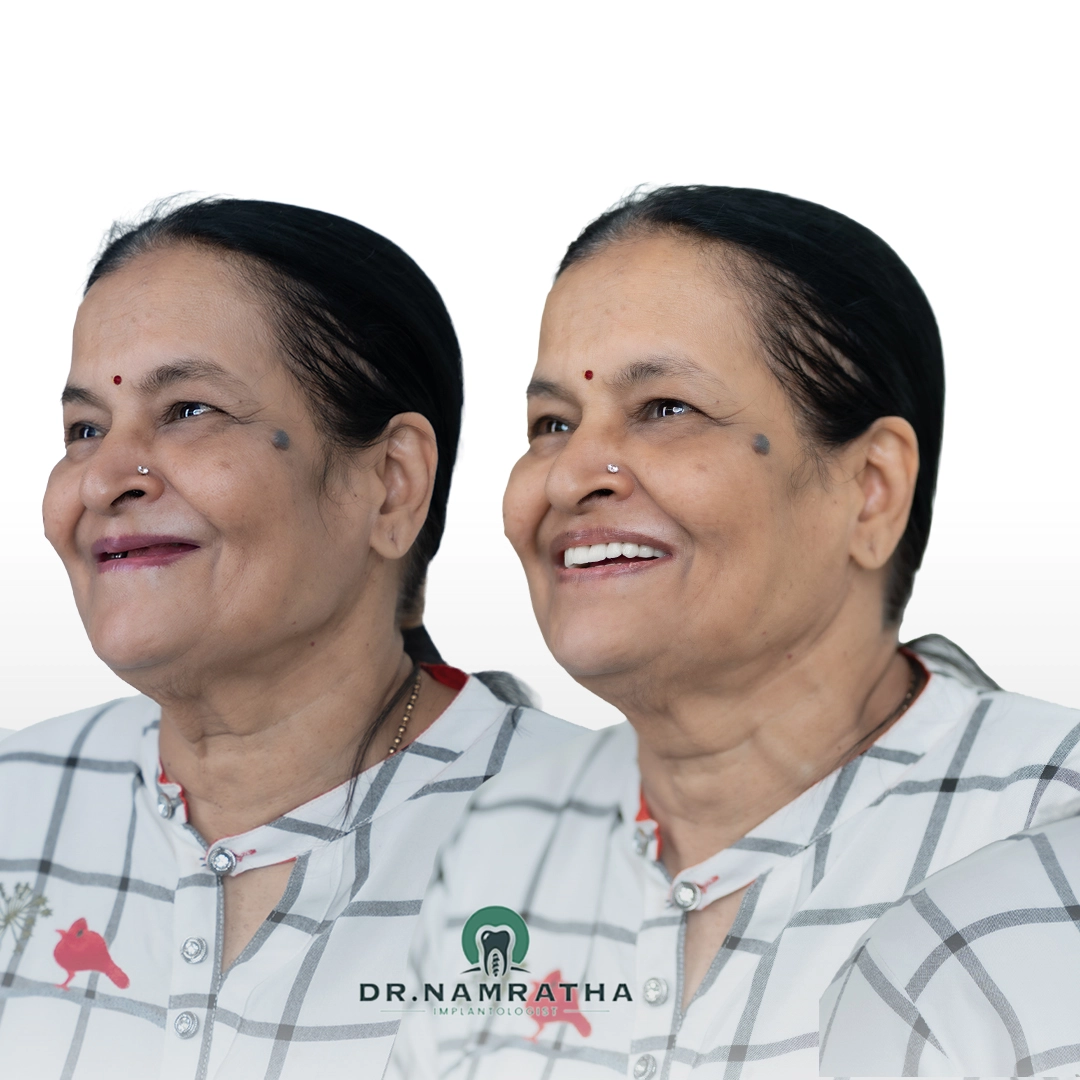
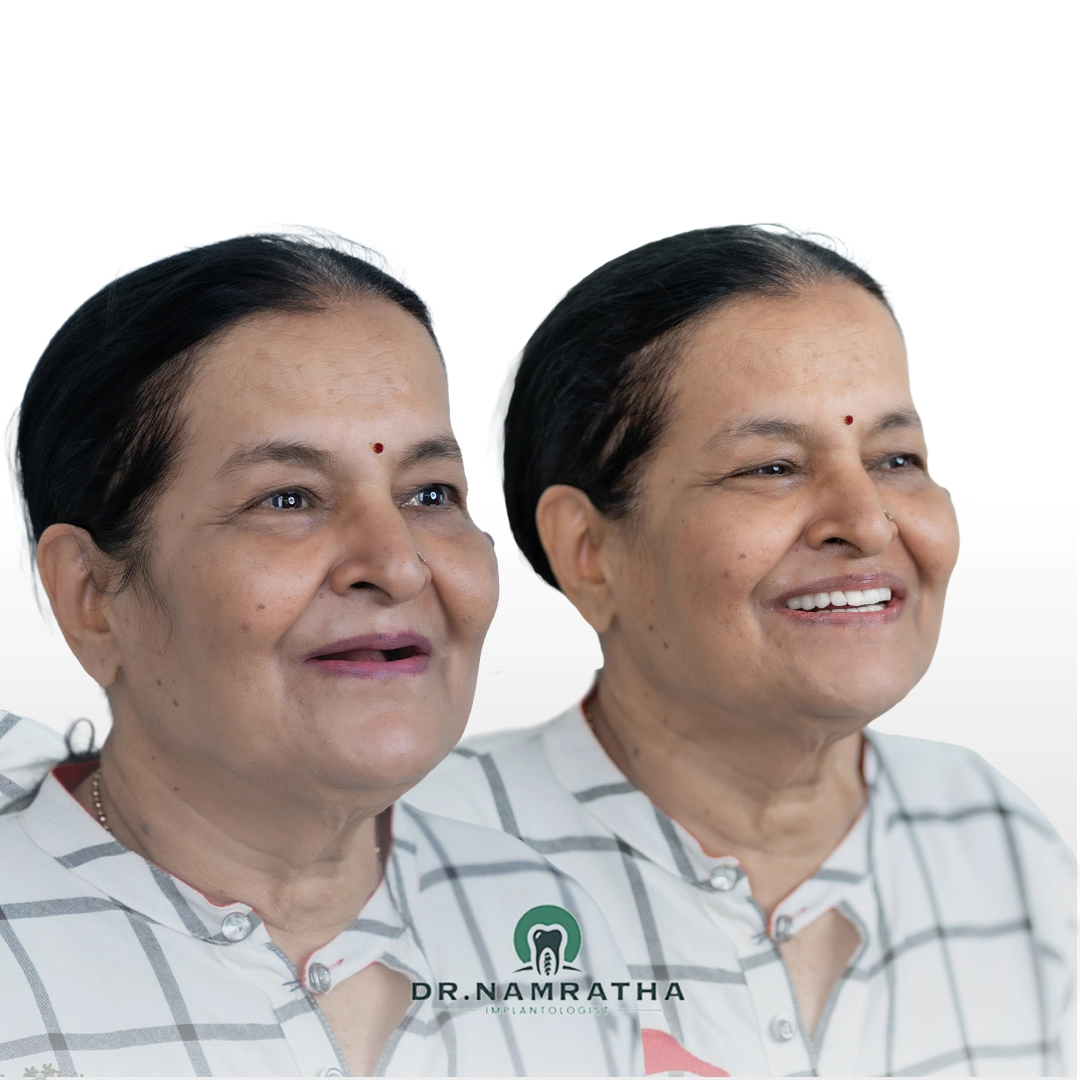
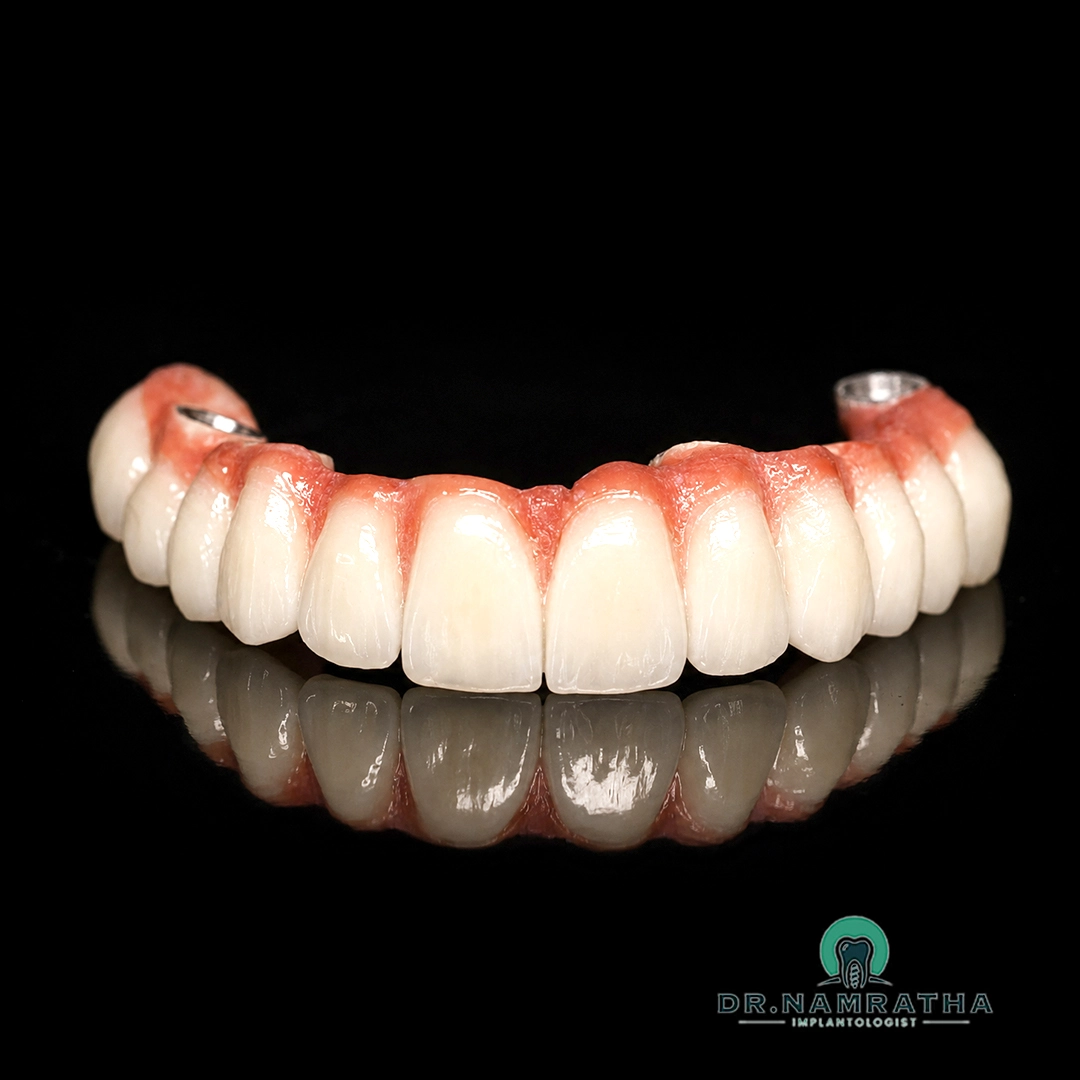
The treatment outcome for Sulochana Agarwal was excellent. The All-on-6 implant-supported prosthesis demonstrated stable, uneventful osseointegration at follow-up review, with healthy peri-implant soft tissues and even load distribution across the arch. The fixed, bone-anchored restoration provided the stability that her periodontally compromised natural teeth had long since ceased to offer.
Masticatory function was restored to an excellent standard, allowing the patient to return to a normal, varied diet without discomfort or instability. The patient reported a marked improvement in confidence and day-to-day comfort. No evidence of implant mobility, peri-implant inflammation, or bone loss was observed at review appointments.
The overall clinical assessment, conducted by Dr. Namratha Chandrahari, recorded a satisfactory outcome overall, with excellent functional restoration and a good prognosis for long-term implant survival, contingent on continued oral hygiene diligence and adherence to the periodontal maintenance and review schedule.
Long-Term Expectations
The long-term clinical outlook for Sulochana Agarwal is favourable, provided that she maintains rigorous oral hygiene and attends the prescribed periodontal maintenance and implant review schedule. Given her history of aggressive periodontitis, sustained plaque control around the implant-prosthesis interface will be particularly important in preventing peri-implant disease and preserving the surrounding bone.
The osseointegrated All-on-6 implants will continue to function as stable artificial roots, providing ongoing mechanical stimulation to the alveolar bone and helping to prevent further ridge resorption. Periodic professional cleaning and six-monthly clinical reviews will be central to monitoring peri-implant tissue health over time. With consistent maintenance, the implant-supported prosthesis is expected to deliver reliable long-term functional and aesthetic performance.
Patient Feedback
Sulochana Agarwal shared the following account of her experience following treatment:
“My teeth had been getting loose for so many years that I almost accepted it as normal for my age. Eating had become difficult and I was always conscious of my smile. Dr. Namratha explained that implants could give me fixed teeth again, and the difference has been remarkable. I can eat comfortably now and I feel much more confident. I only wish I had considered this sooner.”