
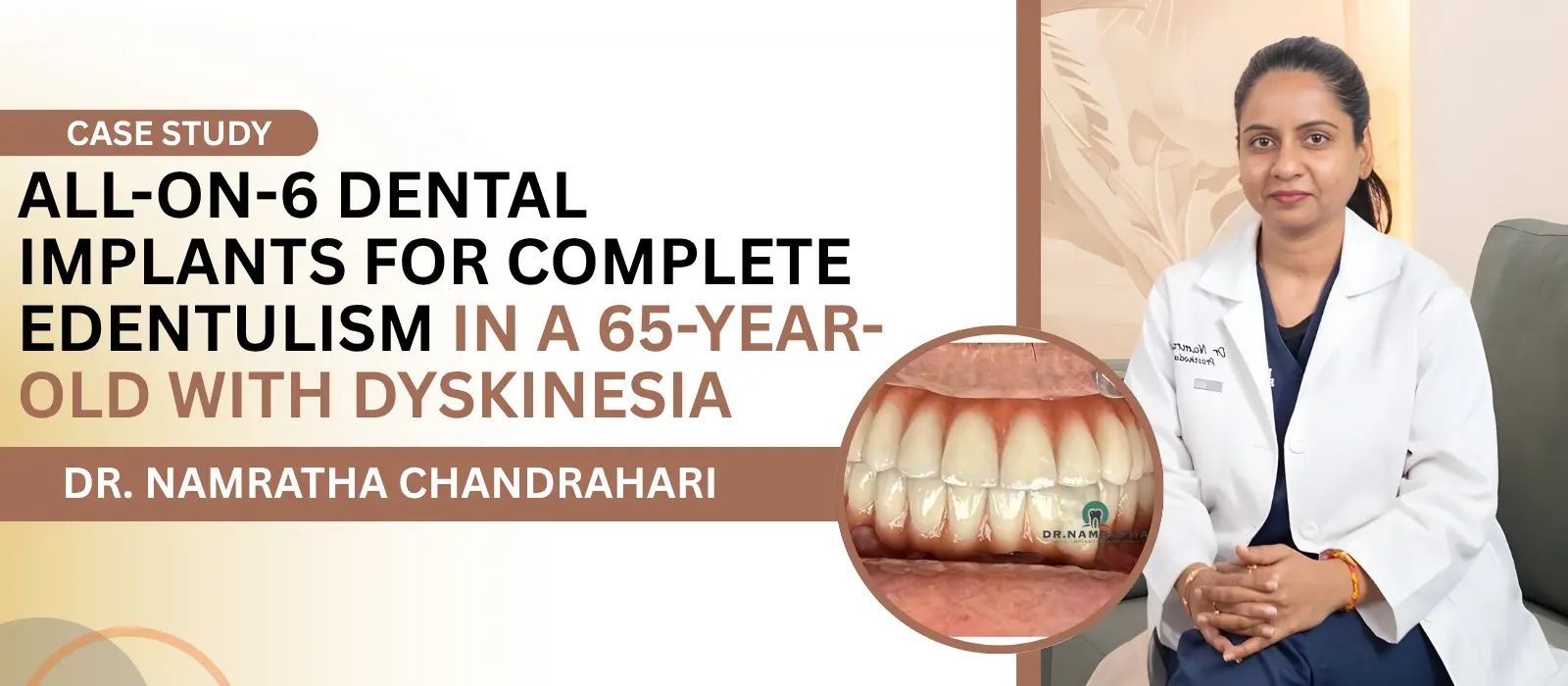
All-on-6 Dental Implants for Complete Edentulism in a 65-Year-Old with Dyskinesia
Doctor’s Name:
Patient's Name
Sambasiva Murthy
Chief Complaint
Completely edentulous; conventional denture plan shifted to implant-supported rehabilitation due to dyskinesia with mandibular instability
Diagnostic Method
CBCT (Cone Beam Computed Tomography)
Clinic Name
Enamel Dental Clinic, Banjara Hills, Hyderabad
Patient's Age
65 years
Gender
Male
Treatment
All-on-6 Full Mouth Dental Implants
Patient Background
Sambasiva Murthy, a 65-year-old male from Hyderabad, presented to Enamel Dental Clinic in Banjara Hills with a clinically demanding case of complete edentulism involving both arches. The initial assessment had indicated conventional removable dentures as a possible treatment pathway. However, a concurrent neurological diagnosis of dyskinesia substantially altered the clinical approach. Dyskinesia is characterised by involuntary, repetitive muscle movements, and in this patient, it was producing persistent mandibular instability that rendered stable denture retention unachievable.
The involuntary jaw displacement created a clinical environment in which a removable prosthesis could not maintain the positional consistency required for reliable mastication or clear speech. Following a comprehensive reassessment, the treatment plan was redirected toward a fixed, implant-anchored rehabilitation. All-on-6 dental implants were identified as the most clinically appropriate intervention, providing a bone-integrated, non-displaceable prosthetic foundation that addresses the biomechanical limitations imposed by the patient’s movement disorder.
Presenting Symptoms
The clinical presentation at Enamel Dental documented the following findings across Sambasiva Murthy’s case:
Complete edentulism.
All dentition was absent across both the maxillary and mandibular arches, with no remaining natural teeth to provide any prosthetic anchorage or occlusal support.
Dyskinesia with mandibular instability.
Involuntary, repetitive jaw movements of neurological origin produced continuous positional shifts in the mandible, making retention of a conventional removable prosthesis clinically unachievable.
Abandoned conventional denture plan.
Conventional complete dentures had been the primary treatment consideration but were contraindicated upon confirmation of uncontrolled mandibular movement, necessitating a fundamental shift in the rehabilitation approach.
Severely compromised masticatory function.
The absence of any fixed occlusal support, combined with uncontrolled mandibular displacement, rendered normal mastication impossible, restricting the patient to a severely limited diet.
Impaired speech clarity.
The lack of fixed dental support and the involuntary jaw movements were producing measurable deterioration in phonation, affecting the patient’s communication in social and family settings.
Reduced quality of life.
The cumulative functional and aesthetic deficits were adversely impacting the patient’s participation in social activities, family meals, and routine daily interactions.
These presenting findings established a case of considerable clinical complexity. The coexistence of complete edentulism and a movement disorder required a prosthetic solution capable of delivering fixed, bone-anchored stability independent of muscular control a criterion that only implant-supported rehabilitation could fulfil.

Book Your Appointment
Managing complete tooth loss alongside a movement disorder requires specialised treatment planning.
Book a personalised consultation with an experienced implant specialist today.
Diagnostic Method
A comprehensive clinical oral examination was performed to evaluate the extent of alveolar bone resorption across both arches and to determine the anatomical feasibility of implant placement. Given the additional clinical variable of dyskinesia, exact three-dimensional preoperative data was critical before any surgical planning could be finalised.
A CBCT (Cone Beam Computed Tomography) scan was acquired to produce a detailed three-dimensional reconstruction of both the maxilla and mandible. The scan provided precise measurements of available bone height, bone width, and bone density at each proposed implant site. It additionally identified the spatial relationship of the planned implant positions to critical anatomical structures, including the maxillary sinus floors and the inferior alveolar nerve canals. In an All-on-6 case involving complete edentulism, where the implant-supported prosthesis must bear the entire functional load without assistance from natural dentition, this level of preoperative imaging detail is not optional — it is a clinical prerequisite.
The CBCT data was used to plan implant positions and angulations with the precision required to achieve maximum primary stability within the available bone envelope.
Diagnosis
Clinical examination and CBCT evaluation confirmed a diagnosis of complete edentulism of both arches, with residual alveolar bone resorption consistent with long-standing tooth loss. The concurrent presence of dyskinesia with associated mandibular instability eliminated removable prosthetic options from clinical consideration, as no removable design could provide the retention or stability required under conditions of involuntary jaw movement.
The clinical findings indicated that a fixed, bone-anchored rehabilitation represented the only predictable treatment pathway. A full mouth rehabilitation strategy employing All-on-6 dental implants was selected on the basis of the biomechanical stability that osseointegrated implants provide — a stability that is independent of the patient’s neuromuscular function and therefore unaffected by the presence of a movement disorder.
Treatment Plan
A comprehensive staged All-on-6 full mouth implant rehabilitation plan was developed for both arches, incorporating the following clinical steps:
- Preoperative bone assessment and surgical mapping: Three-dimensional CBCT data was used to plan implant positions in both the maxilla and mandible, identifying sites with adequate bone volume and density to support primary stability without the requirement for preliminary bone augmentation.
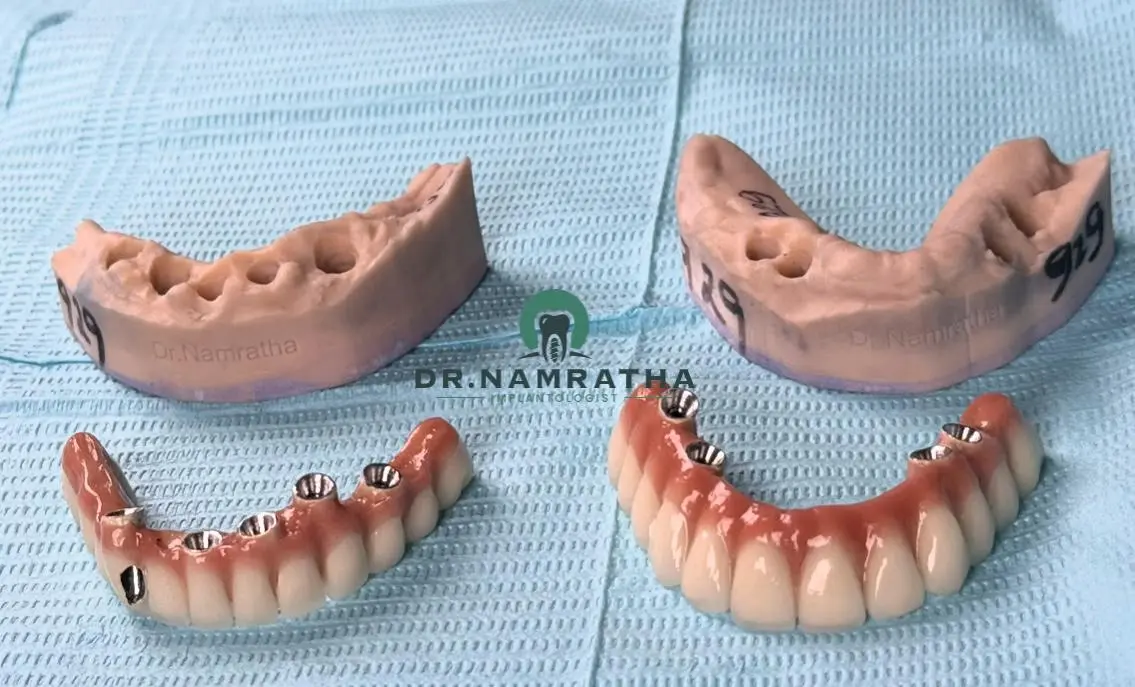
- Placement of six dental implants per arch: All-on-6 implant placement was planned for both arches, with strategically angled posterior implants designed to maximise bone contact in available posterior bone zones, maximise the anteroposterior implant spread, and distribute prosthetic load across the widest possible biomechanical base.
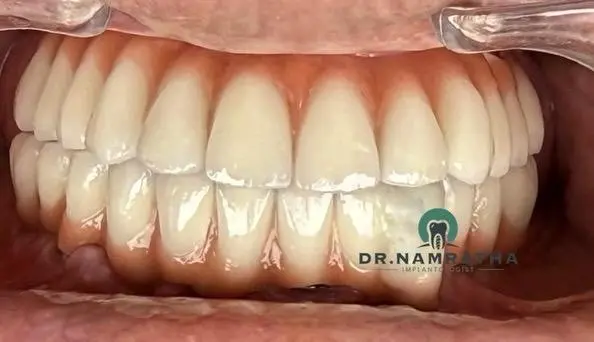
- Immediate provisional fixed prosthesis: Immediate or early-loading temporary fixed prostheses were incorporated into the treatment sequence to restore functional occlusion from day one and to allow the patient to adapt to the fixed prosthetic environment during the osseointegration period.
- Heightened post-placement monitoring: Given the confirmed dyskinesia diagnosis, an enhanced post-operative monitoring protocol was included in the plan to detect and respond to any parafunctional loading on the implants attributable to involuntary jaw movement.
- Final definitive All-on-6 fixed prosthesis: Following confirmed osseointegration of all implants, definitive full-arch fixed implant-supported bridges were to be fabricated and placed, providing the permanent restoration of masticatory function, phonation, and dental aesthetics across both jaws.
Book Your Appointment
Complete tooth loss combined with jaw instability demands a specialist-led treatment plan.
Consult our team to understand your implant options in detail.
Surgical Procedure
The surgical procedure was performed under local anaesthesia with maintenance of strict aseptic technique throughout. Both arches were addressed in a planned sequence. Prior to implant placement, a clinical reassessment of the edentulous ridges was conducted to verify consistency with the CBCT preoperative data.
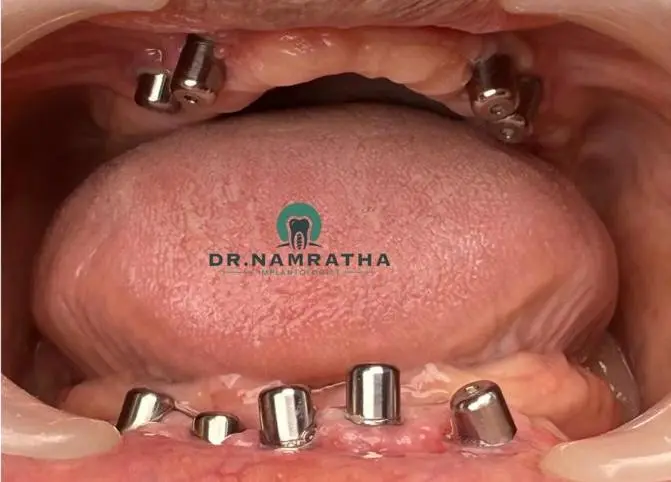
Six dental implants were placed in the maxilla, followed by placement of a further six implants in the mandible, in accordance with the CBCT-guided angulation plan. The posterior implants were placed at the planned tilt angles to engage higher-density posterior bone, in accordance with the core biomechanical principle of the All-on-6 design. This angulation strategy expanded the anteroposterior spread of the implant base and improved the distribution of functional load — a consideration of particular clinical significance in a patient with a movement disorder, where unexpected lateral forces must be anticipated and accommodated.
Primary stability was verified at each implant site using insertion torque assessment prior to abutment placement. Provisional fixed bridges were secured to both arches on the day of surgery, enabling the patient to leave the clinic with immediately functional, fixed teeth. Meticulous attention to soft tissue management and atraumatic technique was maintained throughout the procedure to support undisturbed early healing.
Post-Surgery Care and Guidelines
Detailed post-operative instructions were issued to the patient and his accompanying family member to support uneventful healing and protect the integrity of the newly placed implants:
- Oral hygiene protocol: Gentle tooth brushing with a soft-bristled toothbrush was to commence from day two post-operatively. Antiseptic chlorhexidine mouthwash rinses were prescribed for the first two weeks. Water flosser use around the prosthesis was to be initiated once early peri-implant tissue healing was clinically confirmed.
- Dietary guidelines: A soft diet was to be maintained strictly during the initial osseointegration period, with progressive reintroduction of firmer food textures as clinical healing progressed. Hard, fibrous, and adhesive foods were to be avoided until confirmed prosthetic stability was established.
- Medication compliance: Prescribed antibiotics were to be completed in full. Analgesics and anti-inflammatory medications were to be taken as directed to manage post-operative discomfort and soft tissue oedema.
- Behavioural restrictions: Complete rest was advised for the first 48 hours following surgery. Tobacco use and alcohol consumption were strictly contraindicated during the healing phase due to their documented adverse effects on osseointegration and peri-implant tissue health.
- Dyskinesia-specific monitoring: Additional review appointments were scheduled at compressed intervals in recognition of the patient’s underlying movement disorder, to assess implant loading patterns and identify any adverse effects of involuntary jaw movement on early-phase implant stability.
- Follow-up protocol: A structured schedule of clinical reviews was planned to monitor osseointegration progress, evaluate peri-implant tissue health, and verify the functional and mechanical integrity of both the provisional and definitive prostheses throughout the treatment timeline.
Outcomes & Results
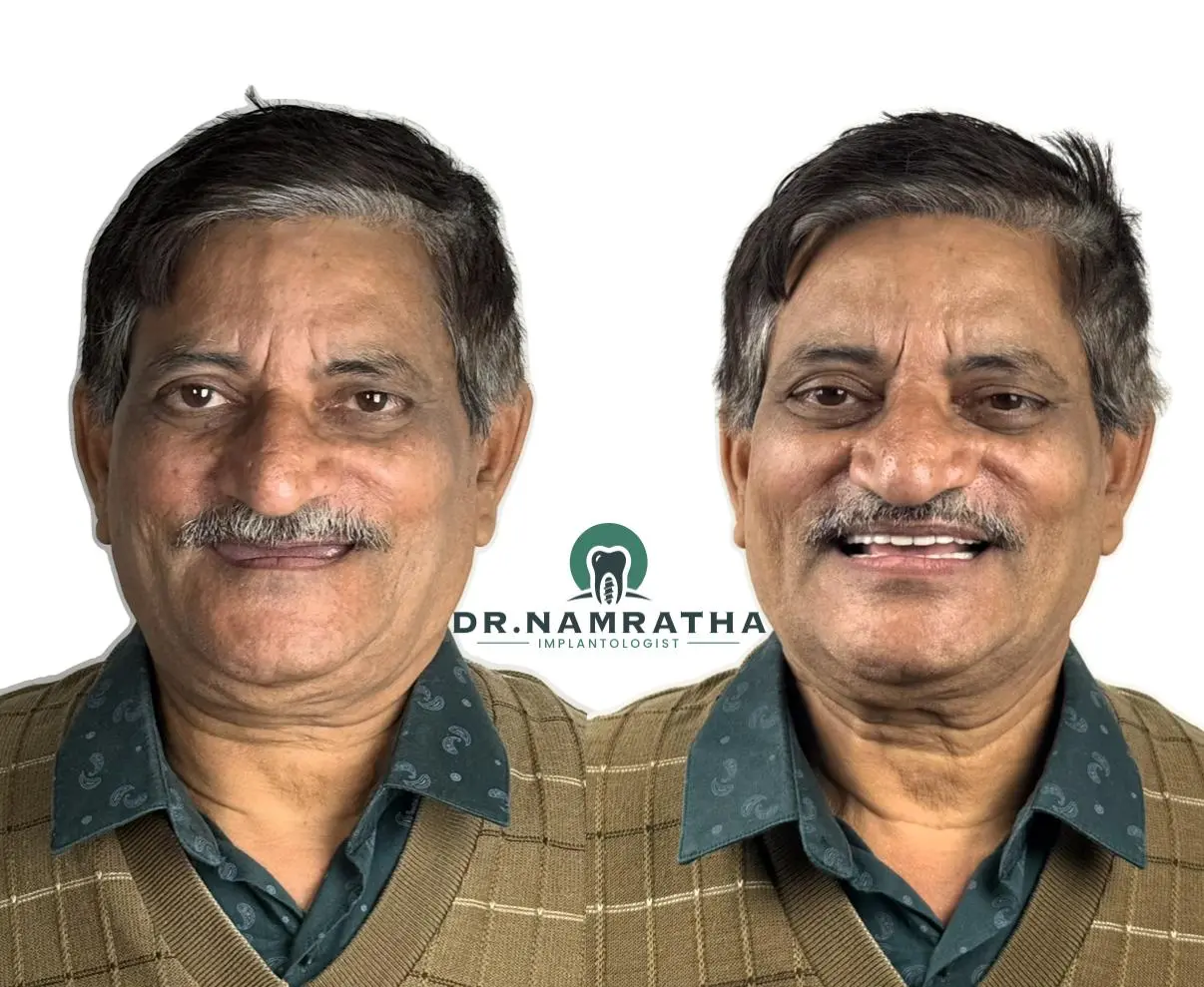
The treatment outcome for Sambasiva Murthy was clinically satisfactory. Both All-on-6 implant-supported prostheses demonstrated stable osseointegration at follow-up review, with healthy, well-adapted peri-implant soft tissues and consistent load distribution across both arches. The fixed, bone-integrated nature of the implant-supported bridges provided the prosthetic stability that the patient’s underlying movement disorder had rendered unachievable with any removable prosthetic approach.
Masticatory function was restored to a clinically adequate standard, enabling the patient to consume a regular diet without prosthetic displacement or discomfort. Phonation showed measurable improvement. The patient reported a significant improvement in daily functional capacity and social participation. Notwithstanding the diagnosed dyskinesia, the osseointegrated implants maintained positional stability without evidence of loosening, adverse mechanical loading, or peri-implant bone loss at the review appointments.
The overall clinical assessment, conducted by Dr. Namratha Chandrahari, recorded a satisfactory functional outcome with a good prognosis for long-term implant survival, contingent upon maintenance of consistent oral hygiene and adherence to the scheduled review programme.
Book Your Appointment
Looking for a permanent solution when conventional dentures are not an option?
Speak with a specialist to explore implant-supported full mouth rehabilitation.
Long-Term Expectations
The long-term clinical outlook for Sambasiva Murthy is favourable, provided that the underlying dyskinesia remains under appropriate neurological management and that the patient maintains the prescribed dental review schedule. The osseointegrated All-on-6 implants function as permanent artificial roots within both jaws, providing ongoing mechanical stimulation to the alveolar bone and thereby preventing the progressive residual ridge resorption that characteristically accelerates in completely edentulous patients.
Periodic professional debridement at the implant-prosthesis interface, combined with six-monthly clinical review appointments, will be integral to preserving peri-implant tissue health and enabling early identification of any mechanical stress concentration attributable to the patient’s involuntary jaw movement. With appropriate maintenance, the implant-supported fixed prostheses are expected to deliver reliable functional and aesthetic performance over a long-term horizon.
Patient Feedback
Sambasiva Murthy provided the following account of his experience following treatment completion:
“I had no teeth and the doctors first told me dentures might work, but they were not fitting because of my jaw problem. When Dr. Namratha explained the implant option, I was not sure, but I went ahead. Now both my jaws have fixed teeth, I can eat properly, and the teeth do not move even with my jaw condition. I feel much better than I did before and I wish I had come here sooner.”
Book Your Appointment
Facing tooth loss with an additional health condition? Advanced implant solutions can still work for you.
Book a consultation to understand what is possible.