
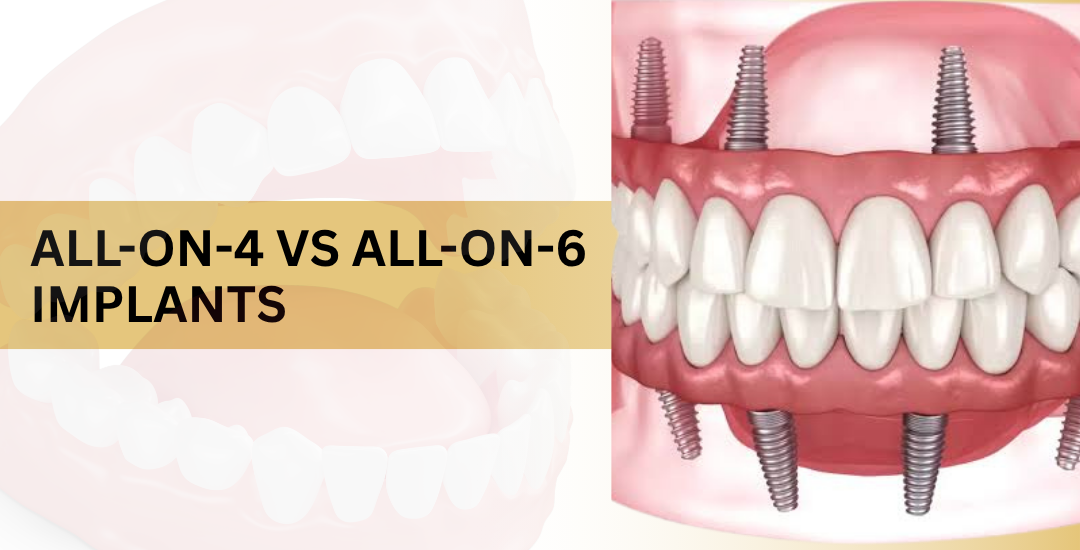
All-on-4 uses four implants to anchor a full arch, while All-on-6 uses six, and the difference comes down to available jawbone and bite force. Both replace a full row of missing teeth in one surgical visit using angled implants, but the extra pair in All-on-6 spreads chewing load across more points.
According to Dr. Namratha Chandrahari,a renowned dentist at Dental Clinic in Banjara Hills, “Four implants work beautifully when posterior bone is decent, but thinner ridges usually tip the decision toward six for a more stable result.”
How Do All-on-4 and All-on-6 Implants Actually Differ?
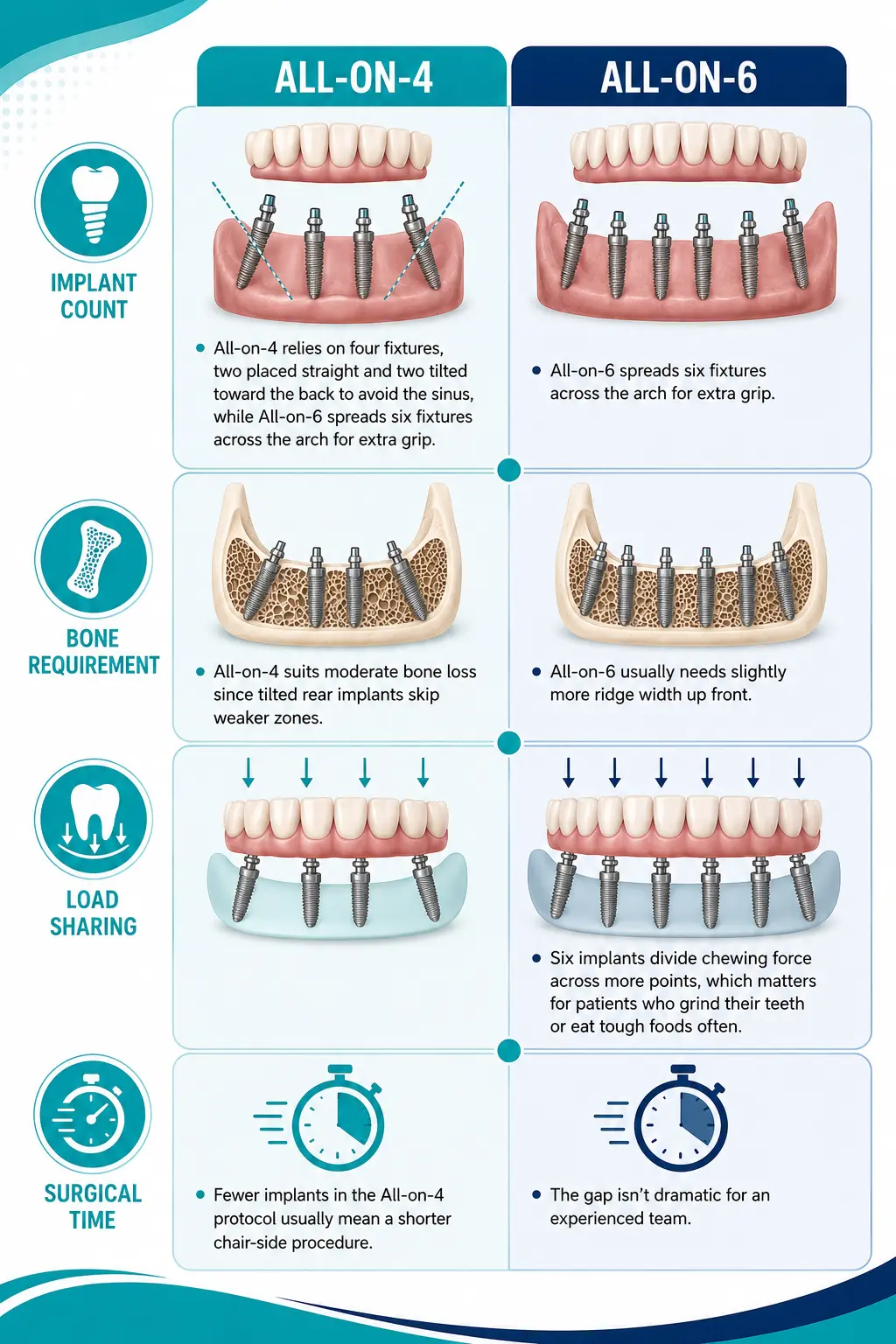
Neither option wins outright, the pick depends on bone volume and bite habits. Patients on the fence are often guided toward All-on-6 Implants once imaging shows enough width for it.
Which Option Suits Your Jawbone and Lifestyle Better?
Fit comes down to imaging first and preference second, not the reverse.
Bone Density: A CBCT scan showing thin posterior ridges may still support All-on-4 through tilted placement, though very low density sometimes calls for a Sinus Lift Treatment first.
Chewing Habits: Heavy grinders or patients who favor tough, fibrous foods often do better with six implants sharing that force.
Maintenance: More implants mean more sites to clean daily, so All-on-6 asks for slightly more hygiene discipline around each abutment.
Recovery Comfort: All-on-4 typically involves less surgical trauma in one sitting, which matters if healing time outweighs long-term load capacity for you.
So it’s a conversation, not a fixed rule, because every bone scan tells a different story. Patients weighing implant count against bone volume often find it useful to see how sinus lift surgery factors into full-arch planning first.
All-on-4 vs All-on-6 Implants
Factor | All-on-4 | All-on-6 |
Implants placed | 4 (2 tilted) | 6 |
Best for | Moderate bone loss | Thinner or wider arches needing extra support |
Load distribution | Concentrated on 4 points | Spread across 6 points |
Surgical time | Shorter | Slightly longer |
Daily cleaning | Fewer sites | More sites |
Good fit for grinders | Sometimes, case-dependent | Generally more forgiving |
Why Choose Dr. Namratha Chandrahari?
The clinic is led by Dr. Namratha Chandrahari, is a globally trained prosthodontist with more than 10,000 successful implant placements and over 500 full mouth rehabilitations behind her, and her background reflects years spent matching implant count to bone anatomy rather than one protocol for everyone.
Patients who get proper CBCT planning before choosing between four and six implants tend to avoid mid-treatment surprises and repeat surgeries. Guessing the number without imaging is how avoidable complications happen.

Book Your Appointment
Not sure how much bone you have left to work with?
FAQ
Can I switch from All-on-4 to All-on-6 later if needed?
Sometimes, but it depends on remaining bone and existing implant placement.
Does All-on-6 take longer to heal than All-on-4?
Healing time is similar, though six sites need slightly more care.
Is a bone graft always needed for All-on-6?
No, it’s only needed when the scan shows insufficient ridge width.
Which option feels more like natural teeth?
Both feel similar once the final prosthetic arch is fitted.
References
