
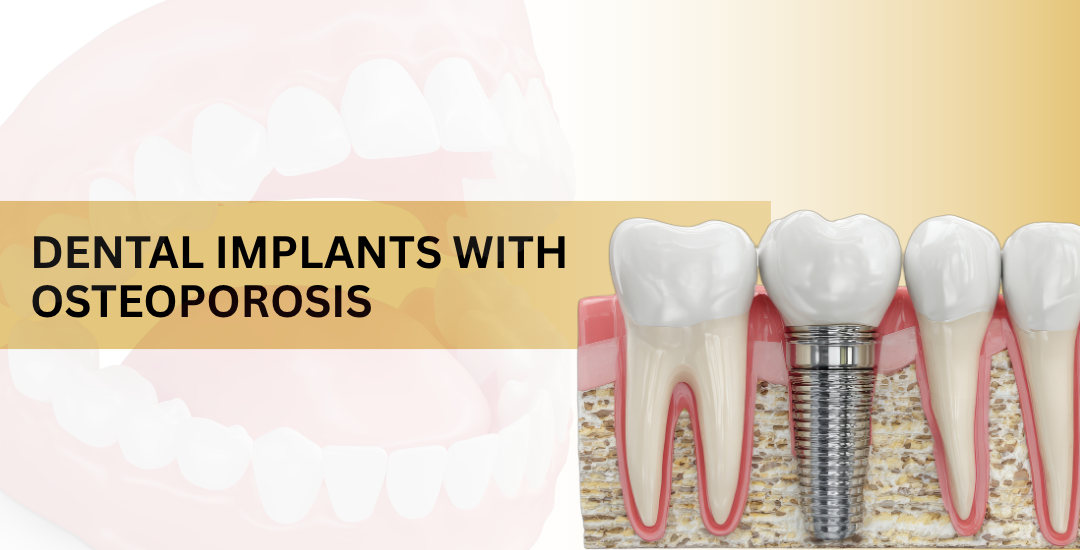
Patients with osteoporosis can receive dental implants, though the condition requires careful pre-treatment assessment to confirm adequate bone density and implant stability. Osteoporosis reduces bone mineral density systemically, including in the jaw, which directly affects osseointegration the process by which a titanium implant fuses with surrounding bone. Success depends on the severity of bone loss, current medications, and whether supportive procedures like bone grafting or sinus lift are needed before implant placement.
According to Dr. Namratha Chandrahari,a renowned dentist at Dental Clinic in Banjara Hills, “Osteoporosis doesn’t automatically disqualify a patient from implants, but it does mean we need a thorough CBCT scan and a detailed medical history before any surgical planning begins.”
How Does Osteoporosis Affect Dental Implant Success?
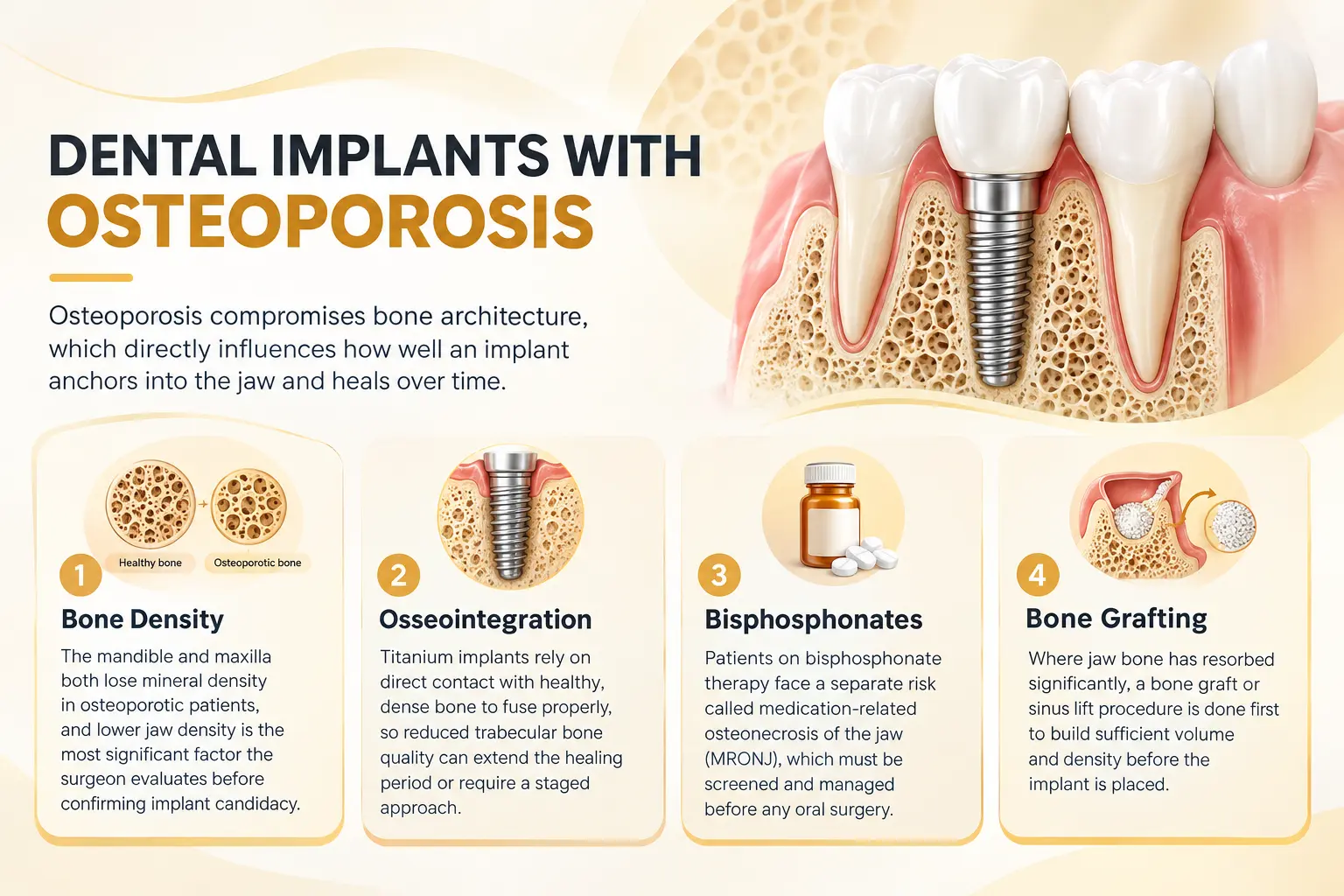
A CBCT scan gives the clearest picture of residual bone volume and helps the dental team decide whether direct implant placement or a staged augmentation approach is appropriate. Full mouth dental implants remain viable even in compromised bone with the right preparatory work.
What Treatment Options Exist for Osteoporosis Patients Needing Implants?
The treatment pathway depends on the degree of bone loss, current medications, and whether single or multiple teeth need replacement.
- Medical Clearance: Coordinating with the patient’s physician to review bisphosphonate use, assess osteonecrosis risk, and sometimes suspend medication before surgery is a standard step the implant team won’t skip.
- Augmentation First: For patients with significant resorption, sinus lift treatment or ridge augmentation adds the bone volume needed to support a stable implant before placement even begins.
- Implant Design: Shorter, wider implants or implants with surface-treated designs that promote faster osseointegration are often selected for patients with lower bone density, because they maximise contact area with available bone.
- Monitoring Protocol: Post-placement follow-up is scheduled more frequently for osteoporotic patients, given the longer osseointegration timeline and the need to catch early signs of integration failure before they progress.
Bone augmentation procedures have a high success rate when planned properly, and most osteoporotic patients who complete pre-treatment assessment go on to receive functional, long-lasting implants, including full-arch solutions like All-on-4 vs All-on-6 implants, when multiple teeth need replacement.
Why Choose Dr. Namratha Chandrahari?
The clinic is led by Dr. Namratha Chandrahari, a globally trained prosthodontist with over 10,000 successful implant placements and 500+ full mouth rehabilitations. Her expertise in complex implant cases including patients with systemic bone conditions is backed by advanced diagnostic tools and international-standard protocols at Enamel Dental.
Patients with medically complex backgrounds consistently achieve stable, aesthetic outcomes here because every case is planned with clinical precision, not a templated protocol.

Book Your Appointment
Concerned about your bone health before implant surgery?
FAQ
Can osteoporosis patients get dental implants?
Yes, with proper bone assessment and pre-treatment planning, most osteoporotic patients qualify for implants.
Does osteoporosis medication affect implant surgery?
Bisphosphonates increase MRONJ risk and must be reviewed by your physician before any oral surgical procedure.
Is bone grafting always needed for osteoporosis patients?
Not always; it depends on residual jaw bone density confirmed by a CBCT scan before treatment planning.
How long does implant healing take with osteoporosis?
Healing typically takes longer, often 6 to 9 months, due to slower osseointegration in lower-density bone.
References
