
Wisdom teeth removal is a standard dental treatment that is perfomed for impacted teeth, infection, pain, or overcrowding. Swelling and discomfort are expected for several days, but should get better with healing overtime. However swollen cheek 3 weeks after wisdom teeth removal may indicate delayed healing, infection or inflammation that needs proper investigation.
“Although each extraction is unique, swelling lasting beyond the typical recovery period or even after the anticipated time must be investigated thoroughly to ensure that the correct treatment is administered and further discomfort is prevented,” says Dr. Namratha Chandrahari
a top-rated dentist in Banjara Hills, Hyderabad. She also points out the significance of post-care, good oral health, and regular dental check-ups for a seamless recovery.
Patients at Enamel Dental Clinic in Banjara Hills, Hyderabad, are treated with a personalized approach and expert evaluation for any concerns they may have after a dental extraction procedure. Under the leadership of Dr. Namratha Chandrahari, a Prosthodontist, Implantologist, and a master of advanced dental procedures, the clinic offers comprehensive solutions for wisdom tooth-related concerns, including delayed swelling management, infection control and recovery guidance.
Dr. Namratha Chandrahari provides safe and effective wisdom tooth removal treatment in Banjara Hills, Hyderabad with a focus on accurate diagnosis and patients’ comfort level. She helps individuals understand the reason behind their symptoms and receive appropriate treatment for a smooth healing process.
Wondering if swelling after weeks is expected? Let’s understand what is normal during recovery.
Is It Normal to Have a Swollen Cheek 3 Weeks After Wisdom Teeth Removal?
After wisdom tooth removal, swelling usually peaks within the first 2–3 days and gradually reduces within one to two weeks. Mild tenderness or occasional discomfort may continue during the healing process.
However, swollen cheek 3 weeks after wisdom teeth removal is not always considered a typical part of recovery. Persistent or new swelling may indicate:
- Infection at the extraction site
- Food particles trapped in the healing area
- Delayed healing
- Gum inflammation
- An underlying dental issue
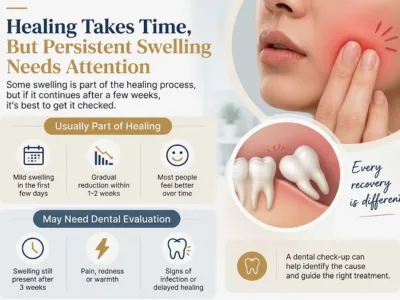
“A dental examination can help determine whether the swelling is part of normal healing or requires treatment,” explains Dr. Namratha Chandrahari, an experienced tooth extraction specialist in Banjara Hills, Hyderabad.

Not sure if your recovery is normal?
Why can swelling appear after the initial healing period? Let’s explore the common causes.
What Causes Cheek Swelling 3 Weeks After Wisdom Teeth Removal?
Several factors can contribute to delayed swelling after wisdom tooth extraction:
- Infection at the Extraction Site
Bacteria can enter the healing area and cause inflammation, swelling, pain, or discharge.
- Food Trapped in the Extraction Socket
Small food particles may get stuck in the healing socket and irritate surrounding tissues.
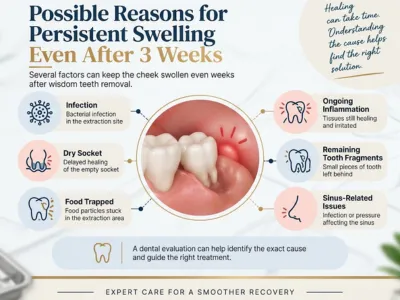
- Delayed Healing
Some extractions, especially impacted wisdom teeth, involve deeper surgical procedures and may take longer to heal.
- Dry Socket Complications
Although more common earlier after extraction, improper healing can sometimes cause prolonged discomfort.
- Gum or Bone Inflammation
Inflammation around the extraction area may contribute to swelling and tenderness.
- Remaining Tooth Fragments
In rare cases, small tooth or bone fragments may cause irritation during healing.
Dr. Namratha Chandrahari, a competent oral surgeon in Banjara Hills, Hyderabad, assesses the extraction site to identify the exact cause.
Is swelling your only concern? Let’s look at signs that require quick dental attention.
What Symptoms Along With Cheek Swelling Need Immediate Dental Attention?
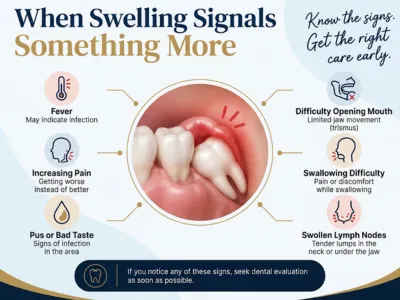
Seek dental care if swelling is accompanied by:
- Increasing pain after initial improvement
- Fever or feeling unwell
- Pus discharge from the extraction area
- Bad taste or foul smell
- Difficulty opening the mouth
- Difficulty swallowing
- Increasing redness around the cheek or gums
- Swelling spreading toward the jaw or neck
These symptoms may indicate infection or delayed healing that requires timely treatment.
Looking for relief at home? Let’s explore simple steps that support healing.
What Can You Do at Home to Reduce Swelling After Wisdom Tooth Removal?
For mild swelling during recovery, these care tips may help:
- Maintain Oral Hygiene
Brush gently around the area. Follow the cleaning instructions provided after the extraction.
- Rinse Carefully
Warm saltwater rinses may help keep the mouth clean after the initial healing stage.
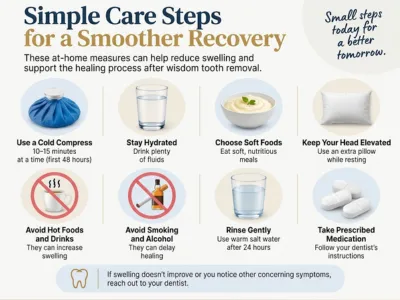
- Avoid Irritating Foods
Choose soft foods. Skip anything too hot, spicy, or hard.
- Stay Hydrated
Drinking enough water supports recovery and overall oral health.
- Follow Medication Instructions
Take prescribed medicines as advised by your dental professional. One more thing, don’t press, touch, or disturb the extraction area since this can delay healing.
Want to know when swelling should actually improve? Here’s the typical timeline.
How Long Does Swelling Last After Wisdom Teeth Removal?
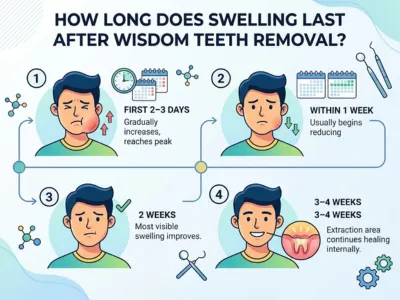
Most patients experience:
- First 2–3 days: Swelling gradually increases and reaches its peak
- Within 1 week: Swelling usually begins reducing
- 2 weeks: Most visible swelling improves
- 3–4 weeks: The extraction area continues healing internally
If swelling remains significant after three weeks or returns after improving, it may indicate an issue that requires dental assessment.
Recovery time can vary depending on factors like the complexity of extraction, impacted teeth, oral hygiene, and individual healing response.
FAQ
1. Should I worry about swelling after wisdom tooth extraction?
Mild swelling initially is normal. Swelling that lasts, or shows up around three weeks should be evaluated.
2. Can infection happen weeks after wisdom tooth removal?
3. How long does it take for a wisdom tooth extraction site to fully heal?
4. Can a swollen cheek after wisdom tooth removal go away on its own?
5. Can food stuck in a wisdom tooth extraction hole cause swelling?
References
https://my.clevelandclinic.org/health/treatments/22119-wisdom-teeth-removal
Disclaimer: The information shared in this content is for educational purposes and not for promotional use.
