
3-Unit Screw-Retained Zirconia Implant Bridge for Missing Upper Left Posterior Teeth (25, 26, 27)
Doctor’s Name:
Dr. Namratha Chandrahari
Patient
Srivani
Age / Gender
55 Years | Female
Chief Complaint
Missing upper left posterior teeth (25, 26, 27) with difficulty chewing on the left side
Diagnostic Method
IOPA (Intraoral Periapical Radiograph)
Clinic
Enamel Dental Clinic, Banjara Hills, Hyderabad
Treatment
Nobel Replace CC Implants (irt 25 & 27) with a 3-Unit Screw-Retained Zirconia Fixed Partial Denture
Patient Background
Srivani, a 55-year-old woman from Hyderabad, presented to Enamel Dental Clinic in Banjara Hills with a gap in her upper left posterior arch. Teeth 25, 26, and 27 the second premolar and both molars in that quadrant were missing, leaving a three-unit edentulous span that was affecting her ability to chew comfortably on the left side and had gone unaddressed for some time.
Rather than a removable partial denture, which would only rest on the ridge and could shift during function, the case called for a fixed, implant-anchored solution capable of restoring the full span with independent, tooth-like support. After clinical and radiographic evaluation, a two-implant, three-unit dental implant-supported bridge was planned, using implants at the 25 and 27 positions to support a connected zirconia restoration spanning all three missing teeth.
Presenting Symptoms
Srivani’s clinical presentation at Enamel Dental included the following:
Missing 25, 26, and 27
Three contiguous teeth were absent in the upper left posterior segment, creating a fixed prosthetic space that could not be restored by a single implant crown alone.
Compromised mastication on the left side
With no natural or prosthetic teeth occupying the premolar-molar span, chewing efficiency on the affected side was reduced, and the patient favoured the opposite arch during meals.
Risk of further ridge collapse and drifting
Left unrestored, the edentulous span carried the ongoing risk of alveolar bone resorption at the site, along with potential drifting or over-eruption of adjacent and opposing teeth.
Preference for a fixed, non-removable solution
The patient wanted a permanent, tooth-fixed restoration rather than a removable partial denture, given the stability a fixed prosthesis offers in a posterior chewing zone.
These findings pointed toward implant-supported fixed rehabilitation as the appropriate treatment path — a solution that would restore three units of missing dentition without relying on adjacent natural teeth for support.
Pre-Treatment Clinical Presentation
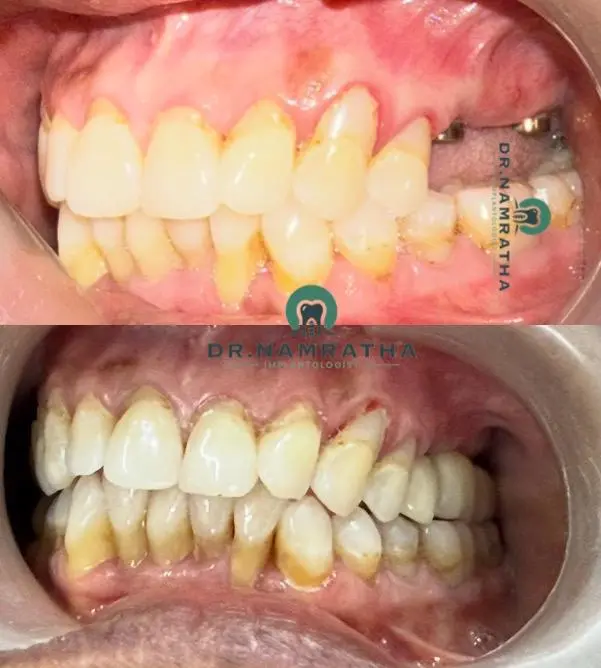
Fig. 1 — Pre-treatment intraoral view showing missing upper left posterior teeth (25, 26, 27) with visible edentulous span and adjacent dentition
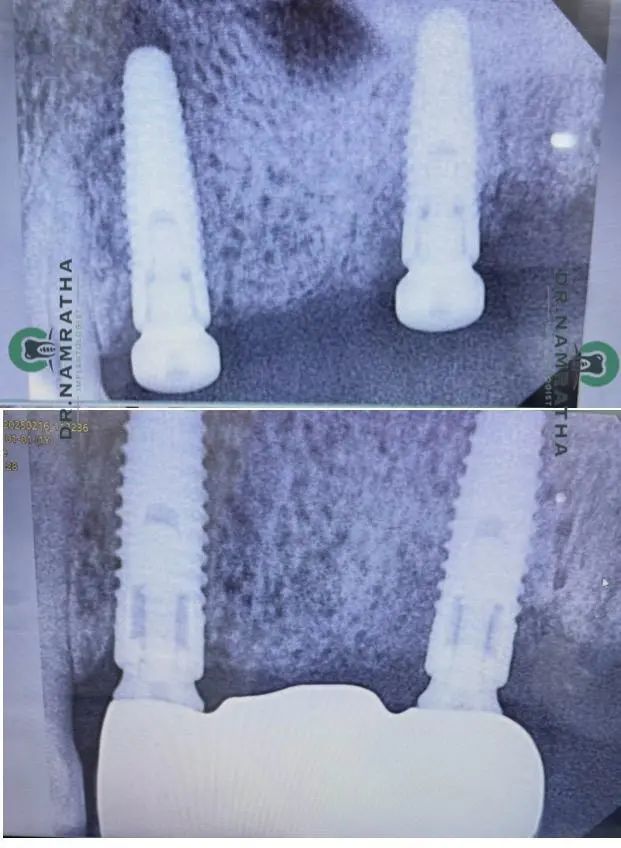
Fig. 1 — Pre-treatment intraoral view showing missing upper left posterior teeth (25, 26, 27) with visible edentulous span and adjacent dentition
Diagnostic Method
An IOPA (Intraoral Periapical Radiograph) of the upper left posterior region was taken following clinical examination of the edentulous span and surrounding dentition. The radiograph confirmed the absence of teeth 25, 26, and 27, and was used to assess residual alveolar bone height and general anatomy at each proposed implant site ahead of surgical planning.
Diagnosis
Clinical and radiographic assessment confirmed a partial edentulous span at 25, 26, and 27 in the upper left posterior quadrant, with the surrounding bone assessed as suitable for implant placement. Given the three-unit gap, a plan combining two implants with a connected fixed bridge rather than three individual implant crowns — was selected as the more biomechanically efficient approach, using the pontic design principle to bridge the middle unit at 26.
Treatment Plan
- Implant site evaluation: The 25 and 27 positions were assessed as the terminal abutment sites for the planned three-unit bridge, with the 26 site to be restored as a pontic.
- Placement of Nobel Replace CC implants: Two implants from the Nobel Replace Conical Connection (CC) system were planned for placement at the 25 and 27 positions, chosen for their conical internal connection and predictable soft-tissue and crestal bone behaviour.
- Healing and osseointegration period: A standard healing interval was built into the plan to allow osseointegration of both implants before proceeding to the restorative phase.
- Fabrication of a 3-unit screw-retained zirconia FPD: A connected, three-unit fixed partial denture in monolithic zirconia was planned, screw-retained directly to the implant abutments at 25 and 27, with the 26 unit designed as a supported pontic spanning the gap.
- Try-in, fit verification, and final delivery: The framework and final restoration were planned to be verified for passive fit, contact points, and occlusion before final screw-retained delivery.
Surgical Procedure
Implant surgery was carried out under local anaesthesia with standard aseptic protocol. Nobel Replace CC implants were placed at the 25 and 27 positions following the positions confirmed on the pre-operative IOPA. Care was taken to align both implants so that the resulting prosthetic platform could accept a connected three-unit bridge, with the 26 site positioned as a passive pontic span rather than restoring the mid-span tooth as a third free-standing implant.
Primary stability was checked at each implant site before the sites were allowed to proceed through the healing phase.
Implant Abutments Following Osseointegration
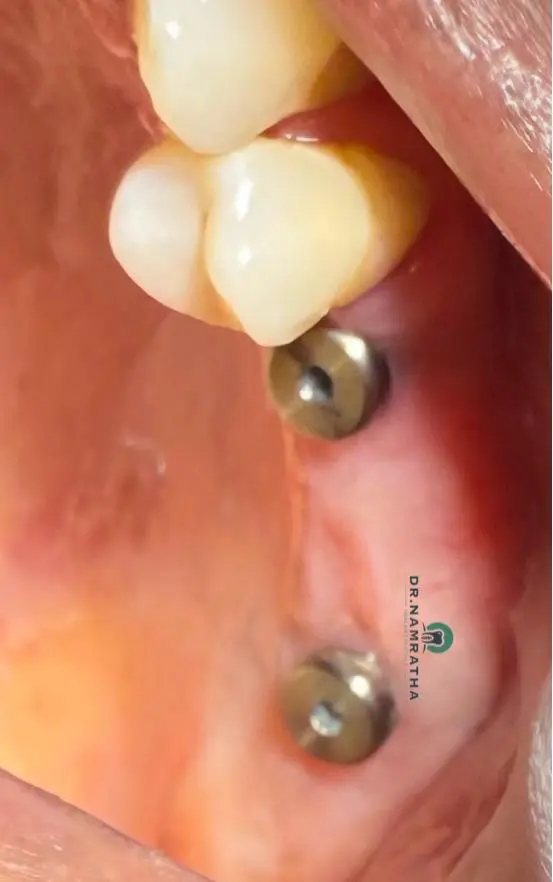
Fig. 3 — Close-up intraoral view of the Nobel Replace CC implant healing abutments at the 25 and 27 positions, following the osseointegration period and prior to final bridge delivery
Post-Surgery Care and Guidelines
- Oral hygiene: Gentle brushing was advised, with chlorhexidine mouth rinses recommended during the initial healing phase, followed by attention to cleaning beneath the pontic area once the final restoration was delivered.
- Diet: A soft diet was advised during the initial healing period following implant placement, progressing to normal function once osseointegration and the final restoration were complete.
- Medications: Prescribed antibiotics and anti-inflammatory medication were to be completed as directed to manage post-surgical discomfort.
- Follow-up: Review visits were scheduled to monitor osseointegration, confirm implant stability, and proceed to impressions and the restorative phase once healing was verified.
- Restoration care: Once the zirconia bridge was delivered, the patient was guided on cleaning around and beneath the screw-retained prosthesis, including the use of interdental aids suited to a fixed bridge pontic.
Outcomes & Results
Treatment outcomes for Srivani were satisfactory. Both Nobel Replace CC implants at the 25 and 27 positions achieved stable integration, providing firm support for the three-unit screw-retained zirconia bridge. The restoration re-established a continuous, fixed occlusal surface across the 25–27 span, restoring normal chewing function on the left posterior segment without reliance on any adjacent natural teeth.
The screw-retained design allowed for secure, retrievable fixation of the bridge to the underlying implants, and the zirconia material provided a durable, aesthetically consistent restoration for the posterior region. The overall clinical assessment, conducted by Dr. Namratha Chandrahari, recorded a satisfactory outcome with a good prognosis, contingent on continued oral hygiene and periodic review.
Long-Term Expectations
The long-term outlook for this case is good, provided routine oral hygiene is maintained and periodic clinical reviews are attended. The two osseointegrated implants at 25 and 27 are expected to function as stable anchors for the bridge over the long term, with the connected zirconia restoration distributing occlusal load evenly across the three-unit span.
Regular professional cleaning around the implant-abutment interface and beneath the pontic, along with periodic radiographic review, will help preserve peri-implant bone and soft tissue health and support the continued success of the restoration.
Patient Feedback
“I had a gap on my upper left side for a while and it was difficult to chew properly on that side. Dr. Namratha explained that instead of a removable option, I could get a fixed bridge on implants. After the treatment, I have a solid set of teeth in that area again and can chew normally. I’m happy with how it turned out.”
— Srivani, 55 years | Enamel Dental Clinic, Hyderabad